10 Pixie Cut vs Bob: Which Short Haircut Is Right for You?
Most people choose between a pixie and a bob by scrolling photos and guessing. That works until the first morning you stand at the mirror with a cut that needs a different routine than you planned for.
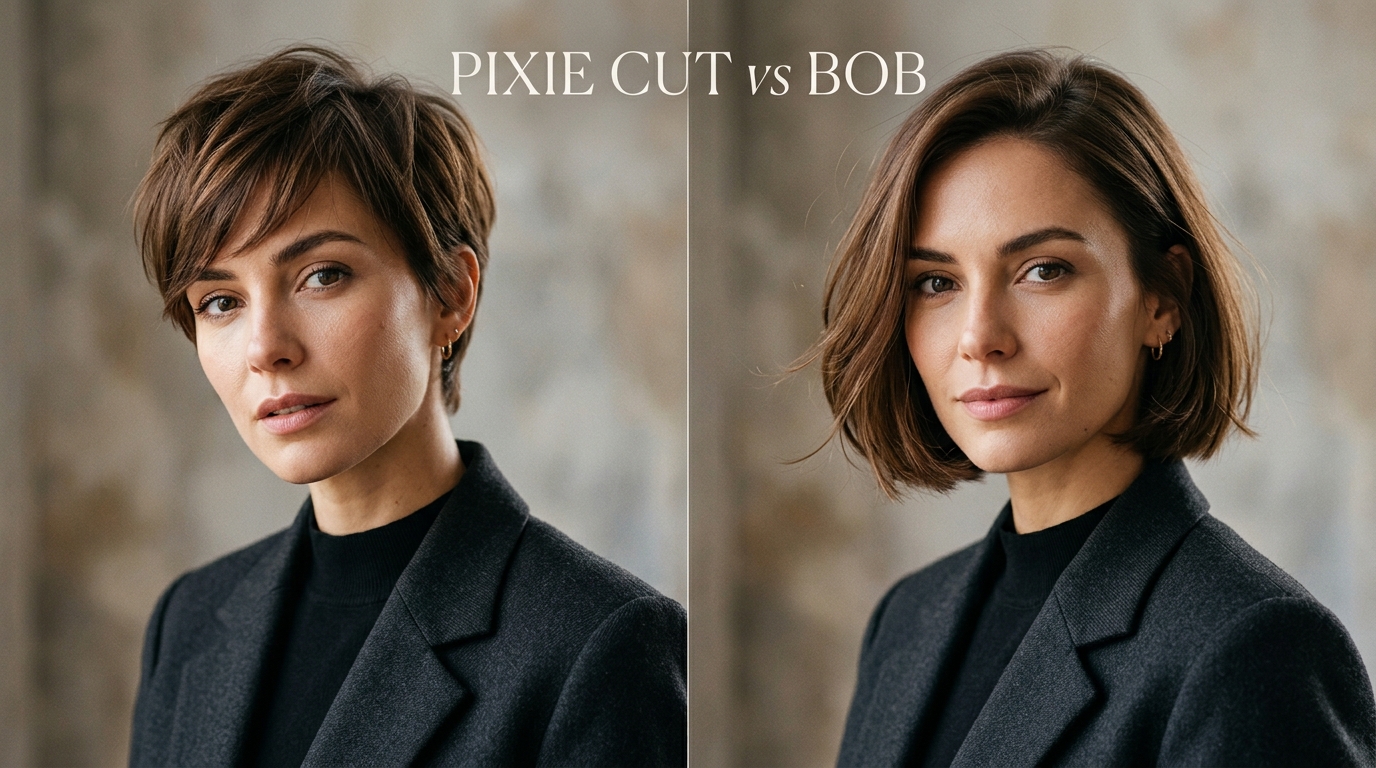
The pixie cut vs bob question is really about daily life, not just looks. One cut shows your neck and ears and wants a trim every few weeks. The other swings at your jaw, ties back into a stubby ponytail, and forgives a skipped appointment. Neither one wins. They suit different faces, hair types, and patience levels.
Below are ten differences that actually change which cut makes sense for you. Each comes with a quick visual you can save or show your stylist. If you are in a hurry, open the table first, then read the sections that match your hair.
Quick Look: What’s Inside
1. Start With Your Face Shape Before You Pick a Side
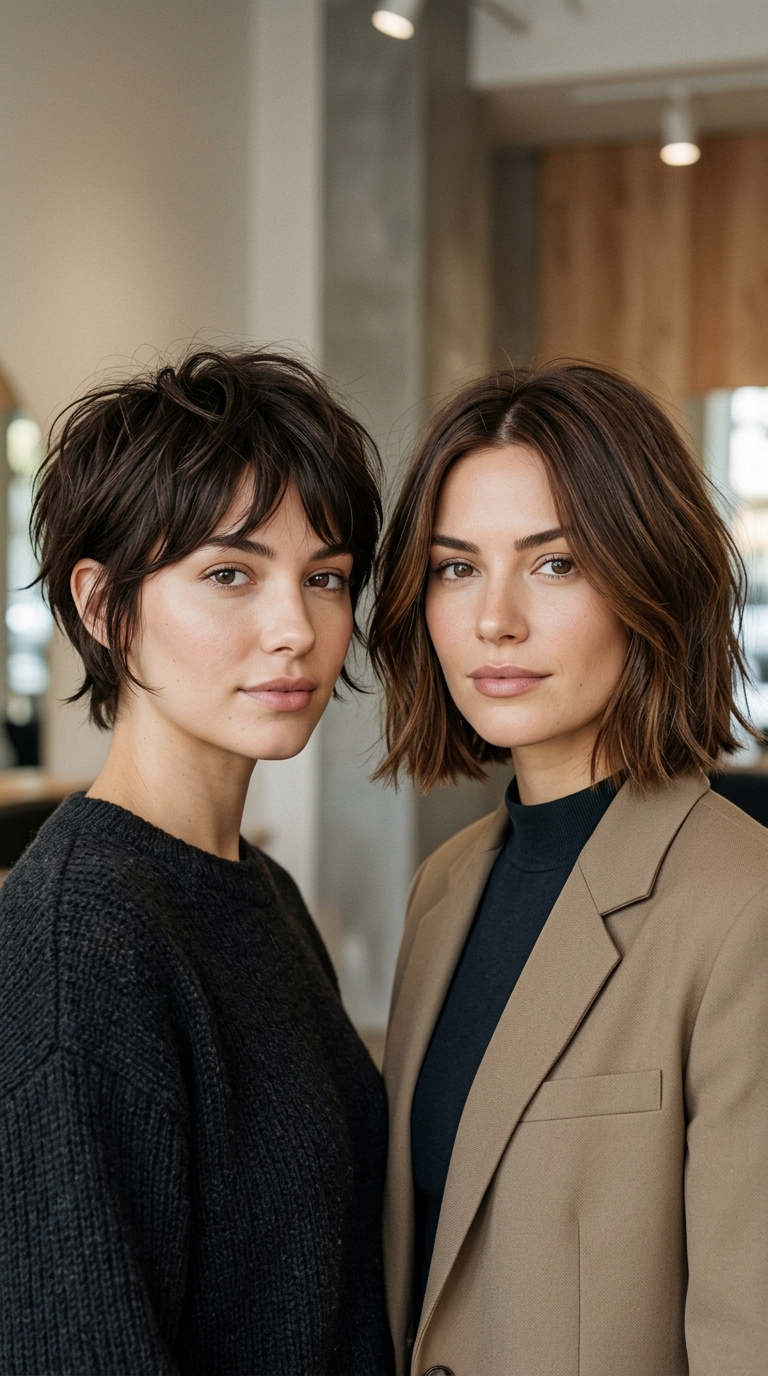
The old rule says pixies only suit small, delicate faces. It does not hold up.
A pixie pulls attention up to your eyes and cheekbones, so it can work on round, oval, and heart shaped faces when the stylist keeps some height on top. A bob draws a line at the jaw, which is why chin length cuts often soften a square face and make a round face look a little longer. Your forehead, chin, and jaw all change the answer.
Pull your hair back at the mirror and decide which feature you want people to notice first.
2. Run a Three Minute Texture Test on Your Own Hair

Wash your hair and let it dry with nothing in it. Then watch what it does on its own.
Texture often settles the choice between a pixie and a bob faster than face shape does, because the cut has to work with your natural pattern, not fight it. Straight, fine hair holds a blunt bob edge well. Wavy and curly hair usually looks best in a pixie with shape cut in, or a bob trimmed while dry.
Air dry a section near your face and note whether it falls flat, waves, or curls.
Roll one strand between your fingers. Barely there means fine, and wiry means coarse.
Hold damp hair up to jaw level, then let go. Curls bounce higher once dry, so a bob can land shorter than you planned.
3. Morning Styling Time: Fast Pixie Mornings vs Forgiving Bob Mornings
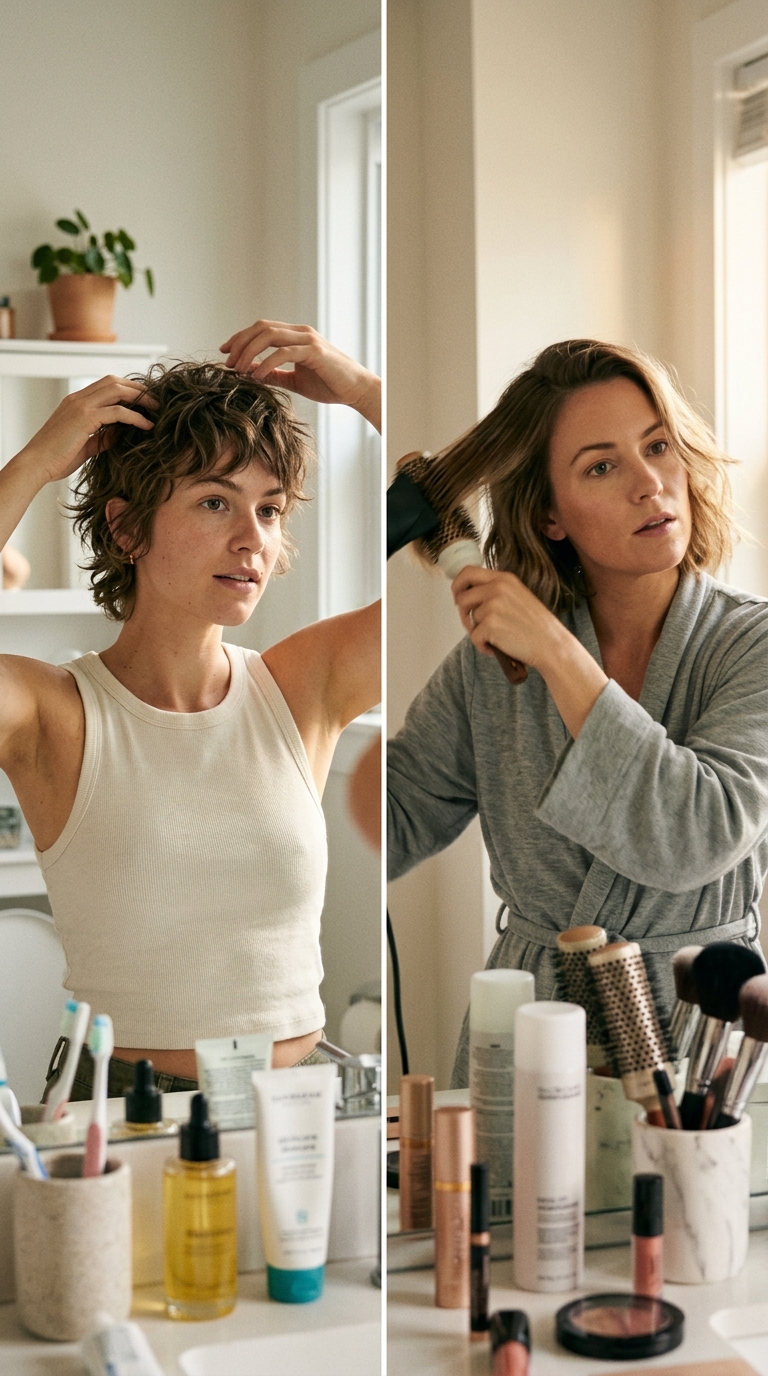
A pixie is quick to style but fussy about placement. A bob takes longer to dry but forgives a messy morning.
With a pixie, you are shaping small sections, so one stubborn cowlick at the front can bother you all day. With a bob, the work is mostly drying it smooth or flipping the ends, and a clip or low ponytail covers a rough day.
Count your real morning minutes before you book, not the ones you wish you had.
4. The Trim Schedule: How Often Each Cut Needs the Salon

Here is the rule: the shorter the cut, the sooner it loses its shape.
A pixie has no spare length to hide behind. The neckline and the fringe look off once they pass their original lines. A bob stretches longer between visits, though the blunt edge starts to feel heavy and the shape drifts toward a lob.
Many stylists book pixies sooner than bobs, so ask for the schedule that fits your hair, then plan for it in your budget.
💡 Quick Tip
Book your next appointment before you leave the chair. Short cuts lose their shape faster than most people expect, and the good time slots go first.
5. The Grow Out Plan: What the Awkward Stage Really Looks Like

A few months in, the pixie sits over your ears and the back flips against your collar. You start wearing a hat to the grocery store.
A bob grows out more gently, but the front pieces reach your shoulders first and flick outward. Both cuts have an in between stage, and both are easier with a plan.
Tell your stylist at the very next trim that you are growing it out, so they cut toward the shape you want instead of the shape you have.
Ears covered, nape fuzzy, fringe in your eyes, and no clear shape to follow.
A soft layered shape with a tidy nape, plus a clip or headband for the in between weeks.
Quick Comparison Table: Ideas 1 to 5
| Idea | Best For | Effort | Quick Note |
|---|---|---|---|
| 1) Face shape match | Everyone, before booking | Low | 🔍 Start here |
| 2) Texture test | Wavy, curly, or fine hair | Low | 🧪 Check it dry |
| 3) Styling time | Busy mornings | Low to medium | ⏱️ Pixie fast, bob flexible |
| 4) Trim schedule | Planners with a salon budget | Medium | 📅 Pixie needs visits sooner |
| 5) Grow out plan | Anyone who changes their mind | Medium | 🌱 Tell your stylist early |
6. Bangs Change Everything: Which Fringe Fits Each Cut

Bangs decide whether a short cut feels soft or sharp.
On a pixie, a long side swept fringe grows out gracefully and hides a high forehead. Wispy, short bangs read bolder and need regular trims. On a bob, blunt bangs give a retro look, while curtain bangs blend into the length and are easier to live with.
Cowlicks matter here. A front swirl can push a fringe sideways no matter what you ask for, so point it out to your stylist before they start cutting.
Check before you commit to bangs
7. Fine Hair Reality Check: Which Cut Fakes More Fullness
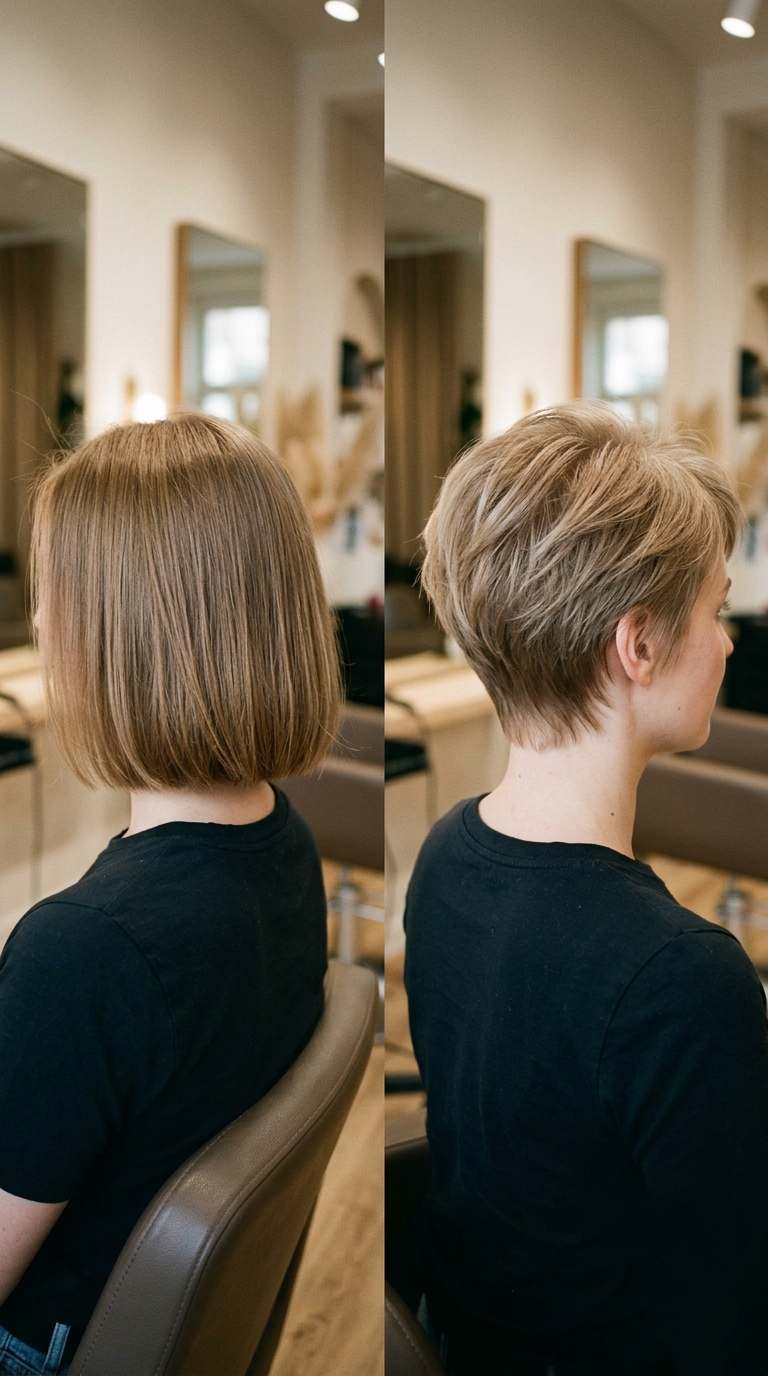
Thin hair behaves differently at each length, so the winner is not obvious.
A blunt bob holds all its weight at one line, which makes the ends look thicker. A pixie removes length entirely, so the roots do the work and a bit of lift at the crown goes a long way.
Heavy layers are the trap. On fine hair they can leave a bob looking stringy and a pixie looking see through.
Ask for a blunt, one length edge on a bob.
Keep some height on top of a pixie.
Heavy thinning or razor layers all over.
Cutting a bob so short it loses all movement.
8. The Ponytail Test: What Each Cut Lets You Tie Back
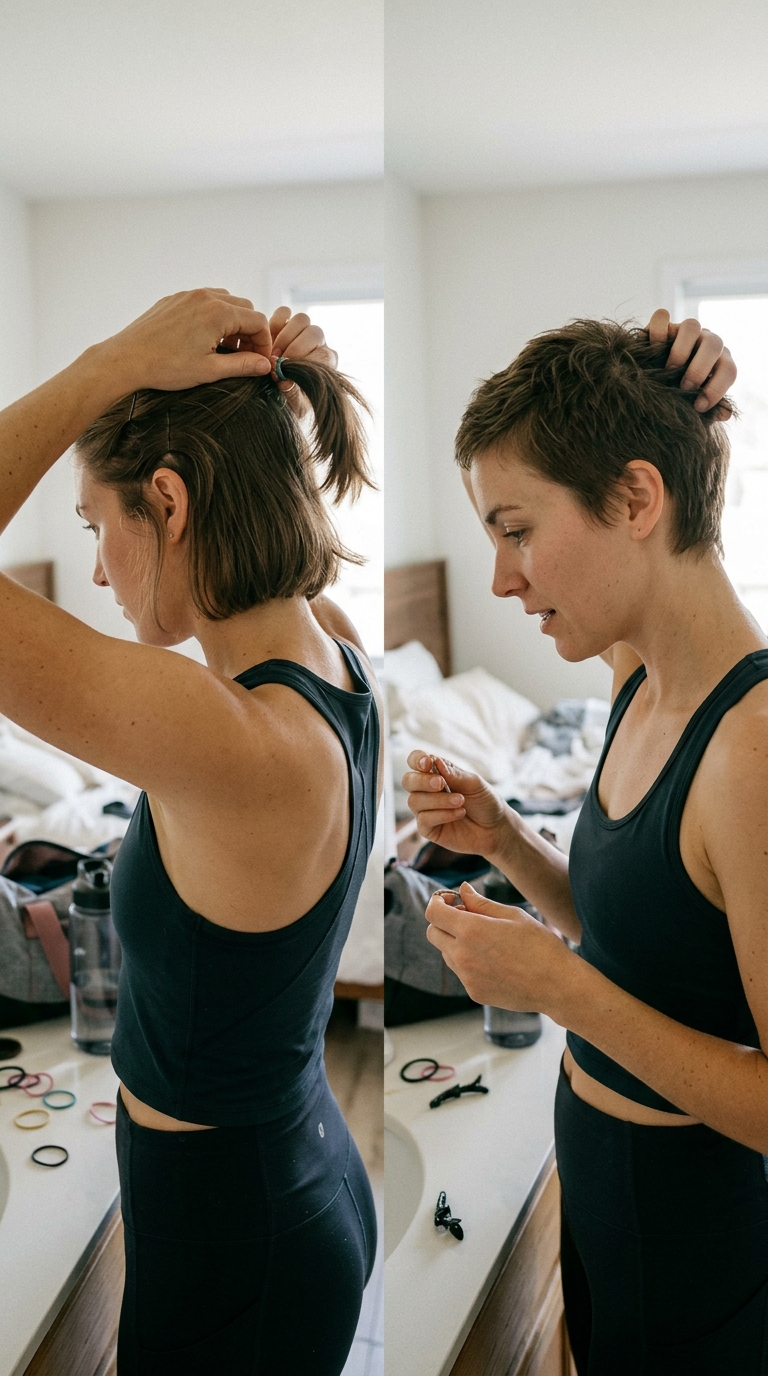
Some people choose a short cut and miss their ponytail within a week.
A bob that sits at the chin or longer usually gathers into a tiny tail or a half up knot. A pixie does not tie back at all, so headbands, clips, and a bit of gel become your tools. If you swim or work out daily, picture that routine first.
Hair that falls out of a clip all day is a good reason to choose a longer bob.
⚠️ Watch Out
If you pull your hair back every day for work or workouts, a pixie takes that option away. Try a short bob test first by pinning your hair up to chin length.
9. Neck, Ears, and Jawline: What Each Cut Puts on Display
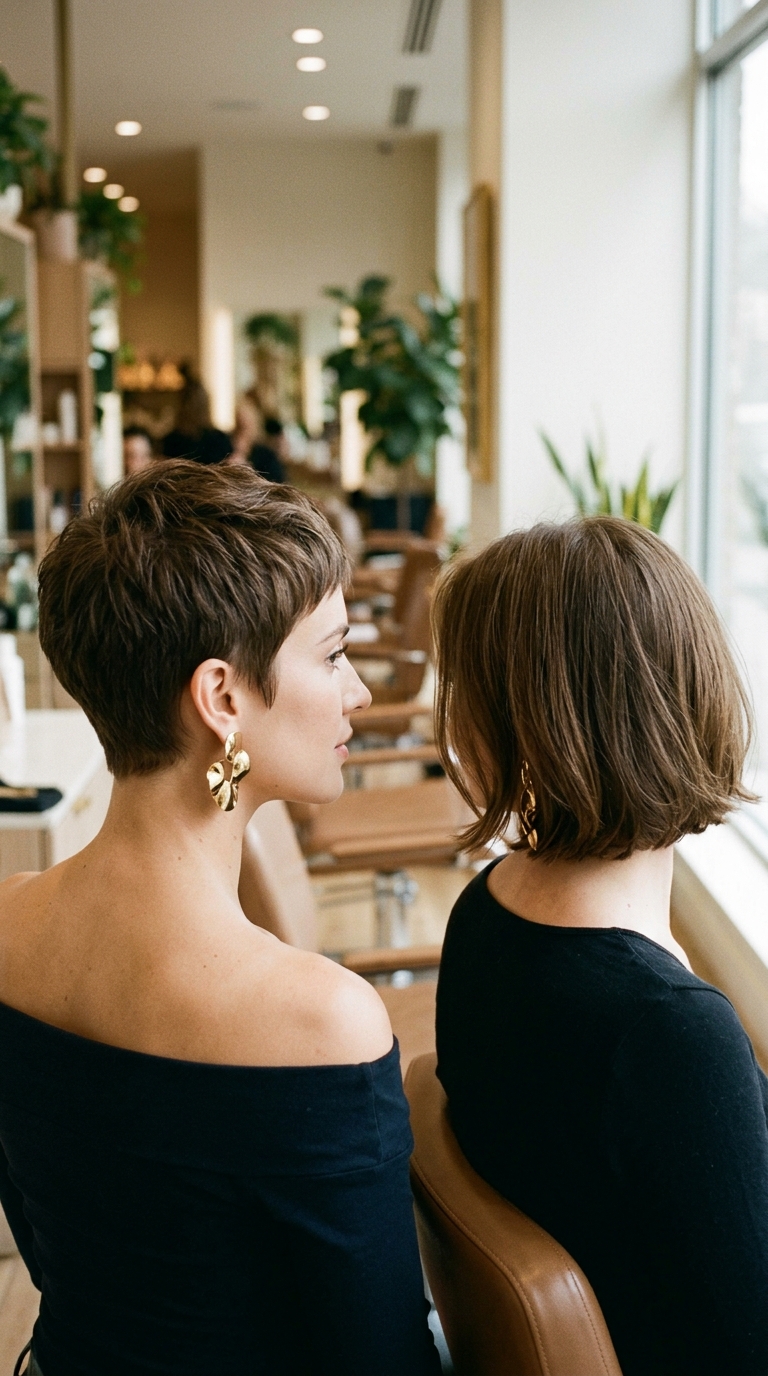
A pixie shows your neck and ears. A bob frames your jaw.
If you love earrings and a clean nape, the pixie gives them room. If you would rather have a bit of cover around your face and neck, a bob gives that without fuss. Think about which features you feel good showing, because you cannot hide them with hair.
Sun protection is a small practical point. A short nape means more skin in the sun.
Ears, earrings, and nape
Cheekbones and eyes
Neck and shoulders
Jawline and chin
Face edges and cheeks
Neck, partly covered
10. The Salon Consult: What to Bring and Say Before the Cut

The best haircuts start with a short conversation, not a surprise.
Bring two or three photos of the cut you want, plus one of what you do not want. Tell your stylist how long you give your hair each morning, and mention any cowlicks, thin spots, or past cuts you regretted. Ask them to show you how to style it before you leave the chair.
A good stylist will happily say if a photo will not work with your hair.
Bring to your appointment
Quick Comparison Table: Ideas 6 to 10
| Idea | Best For | Effort | Quick Note |
|---|---|---|---|
| 6) Bangs | Anyone adding a fringe | Medium | 🌀 Check your cowlick |
| 7) Fine hair | Thin or flat hair | Low | ✨ Blunt edge adds fullness |
| 8) Ponytail test | Active people | Low | 🎀 Bob ties back, pixie does not |
| 9) Neck and jawline | Earring lovers, jaw framers | Low | 👂 Pixie shows more |
| 10) Salon consult | First time short cuts | Low | 📸 Bring photos |
Short Q&A
Is a pixie cut or a bob better for thin hair?
Both can work. A blunt bob usually makes fine hair look fuller at the ends, while a pixie with some lift on top keeps it from looking flat.
Which one grows out faster?
Neither grows faster, but a bob hides the in between stage better. Pixies show every inch as it grows.
Can I wear a pixie cut with curly hair?
Yes. A pixie cut shaped for curls can look great, and a stylist who works with curly hair will cut it while it is dry.
Will I regret cutting my hair short?
It is hard to know ahead of time. Trying a chin length bob first is a gentle way to test how you feel before going shorter.
Conclusion
Choosing between a pixie cut vs bob comes down to what you want from your mornings and your mirror. A pixie gives you speed and a bold, open face. A bob gives you a bit more cover, more styling room, and an easier ride if you change your mind.
Match the cut to your face shape, hair texture, and the time you really have each day, then bring photos and honest notes to your stylist. A short haircut should make your life easier, not add a new chore.
Save this list for the next time you are staring at your hair and wondering whether it is time for a change.