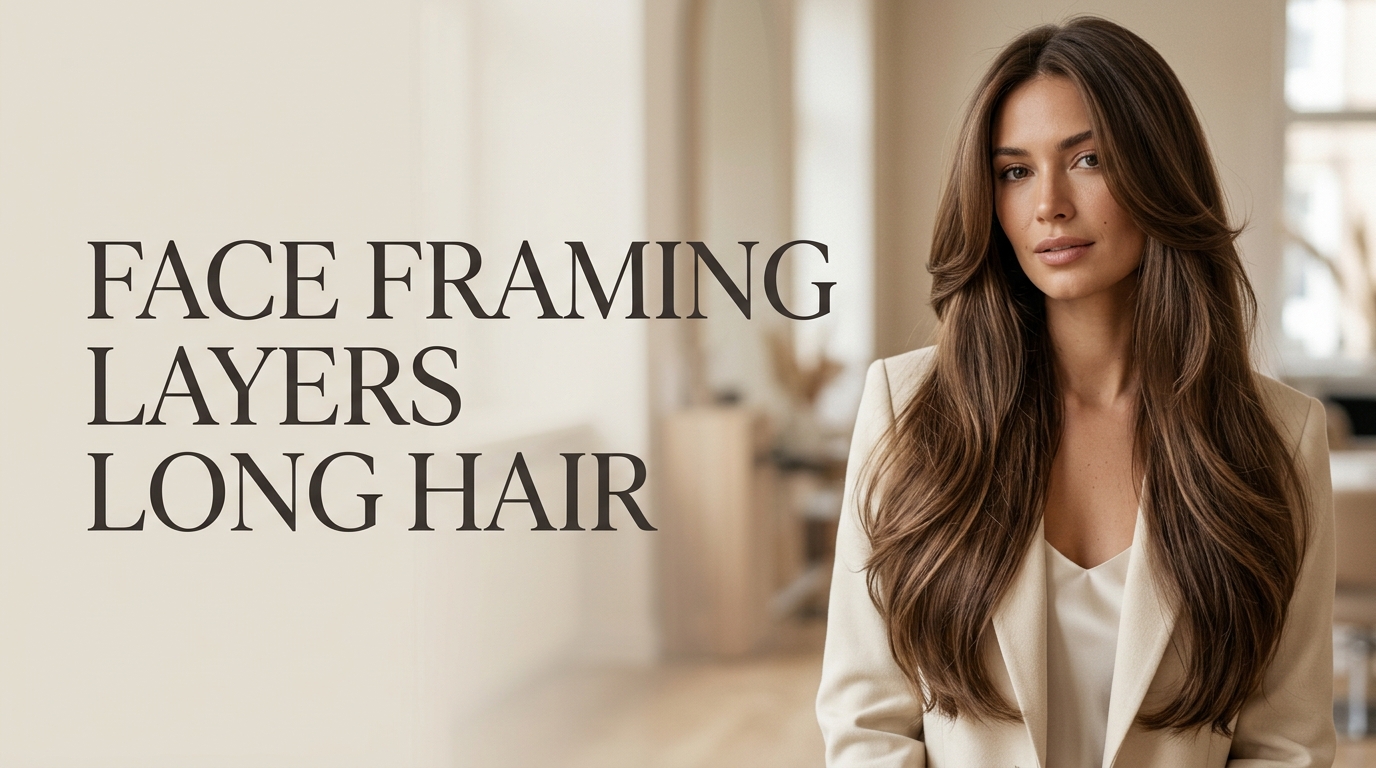
10 Face Framing Layers Long Hair to Try Now
Long hair can feel heavy in a flat, one length way. It hangs there, covers your face, and somehow looks the same on every bad hair day.
If you have been searching for face framing layers long hair ideas, you probably want a change that does not cost you your length. Face framing layers do that. They are the shorter pieces cut around your face, and they leave every inch of the back alone.
The tricky part is that “layers” means a lot of different things. Ask for them without details and you can walk out with a shape you did not want. Too short, too choppy, or too thin at the ends.
So this list breaks them down by what they actually do. You will see where each layer starts, who it flatters, how it behaves when you dry it, and what to say at the salon. Screenshot a few, save the ones that catch your eye, and bring them to your next appointment.
Quick Look: What’s Inside
1. Chin-Length Layers as a Gentle First Step
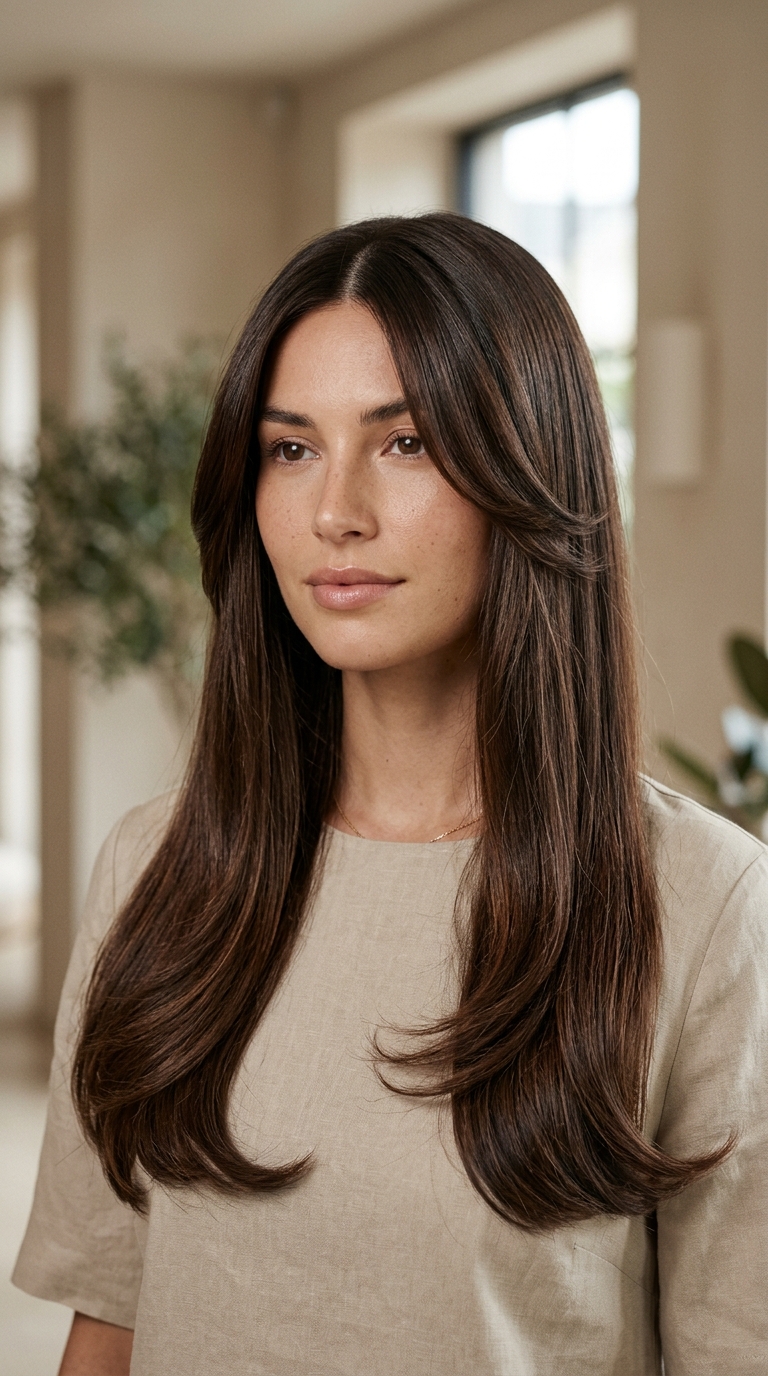
The smallest change is often the one people are happiest with.
A face framing layer that starts at the chin barely touches your length. It just breaks up the straight line near your jaw, so the hair at the front moves while the back stays long. If you have never had layers, this is the safe door in.
Ask for the shortest piece to land at your chin, then stair step longer from there. Blow dry it with a round brush, turning the ends slightly away from your face, and it will curve back on its own. Skip heavy product, since short front pieces get greasy first.
2. Center Part Curtain Layers That Open Up the Face
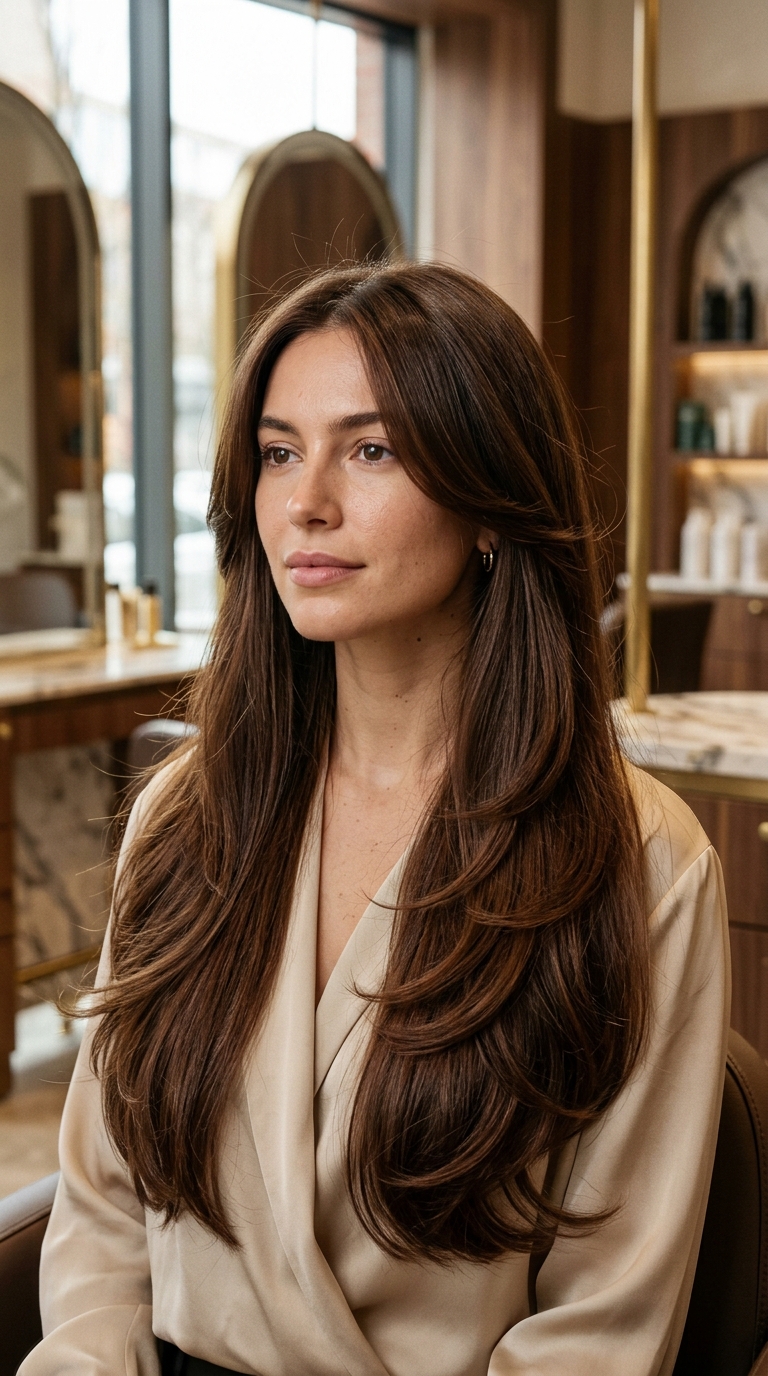
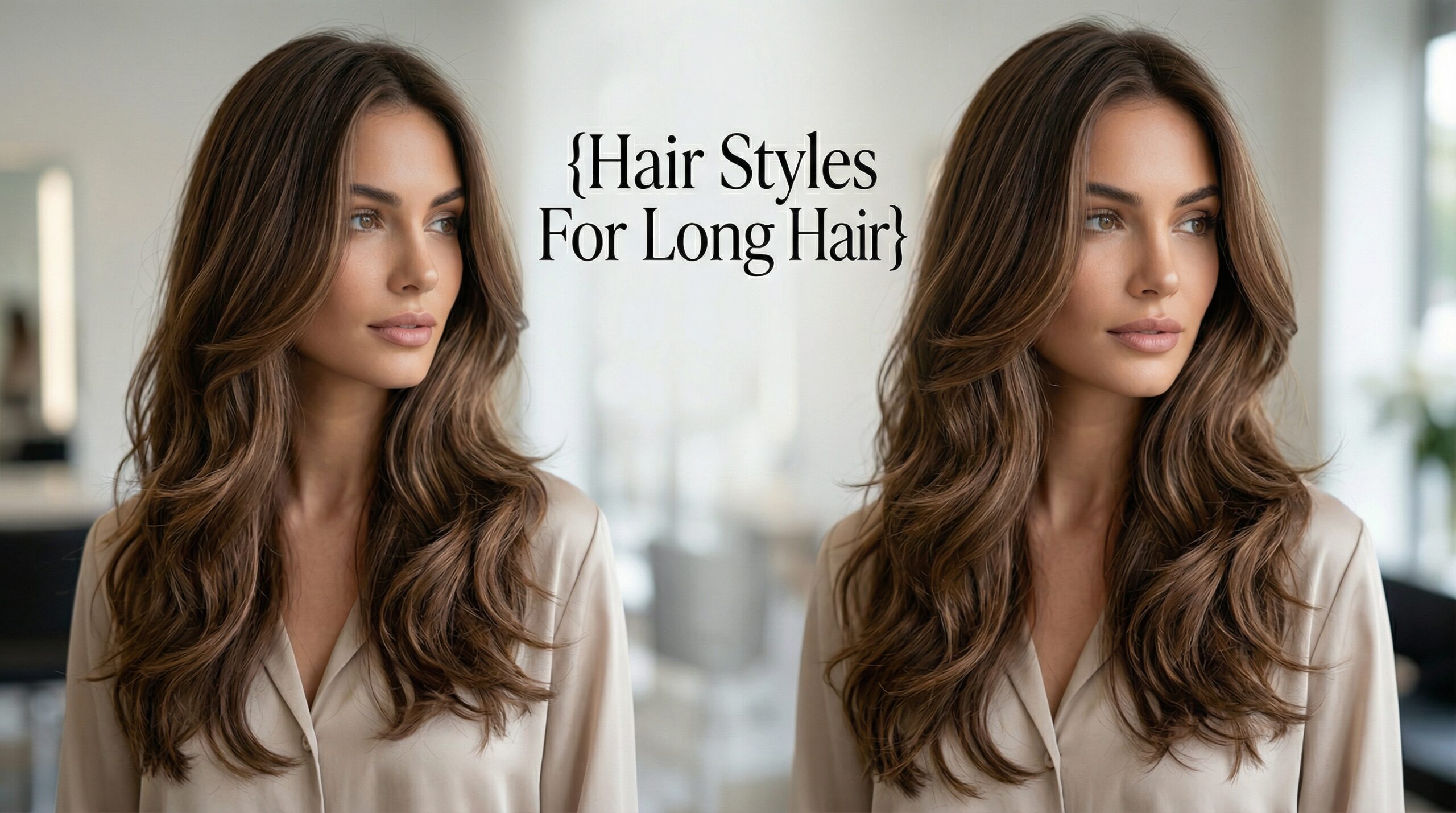
Part your hair down the middle and let the front pieces fall to each side like open curtains.
The layers begin around the cheekbones and grow longer toward the back, so the hair slides away from your face instead of covering it. It works best on straight or lightly wavy hair, since the shape depends on the hair falling flat and even.
- Dry the front sections first, while the hair is still a little damp.
- Pull each side back and away from the face with a round brush.
- Finish with a light mist of hairspray to hold the curve.
💡 Quick Tip
Set your part while the hair is damp and keep that same part as it dries. A part that moves around all day makes the curtains fall unevenly.
3. Collarbone Layers for Hair You Rarely Style
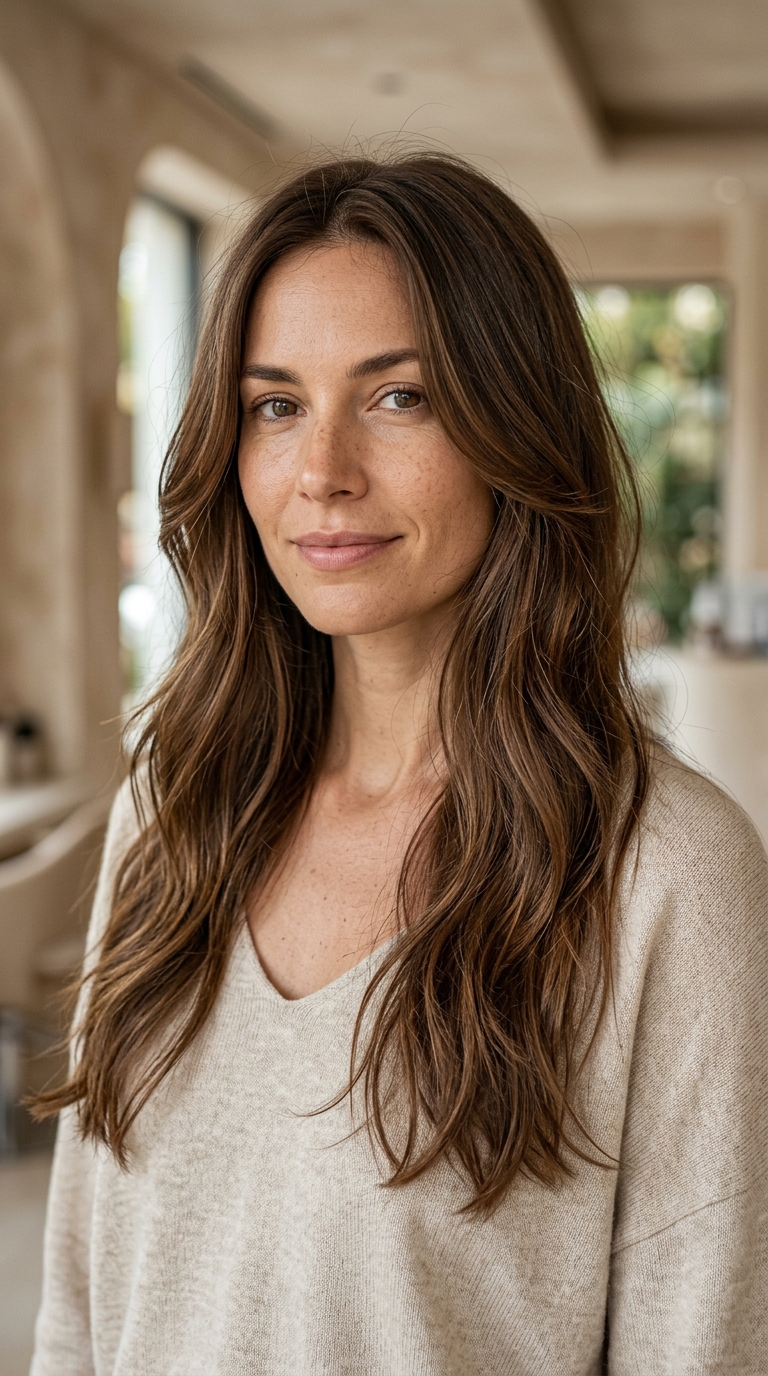
Some mornings the hair gets a ponytail and that is the whole routine.
Layers that start at the collarbone are made for those mornings. They are long enough to tie back with no short pieces sticking out, but when the hair is down, they fall forward and soften the face. Air drying usually works fine.
The trade off is that the shape is quieter. Nobody will spot a big difference at a glance, but your hair will look less like a curtain and more like a cut.
BEFORE
One flat length that hangs straight down and hides the face on both sides.
AFTER ✨
Soft pieces start at the collarbone, so the hair opens near the face and still pulls back into a ponytail.
4. Curved Layers That Work on a Round Face
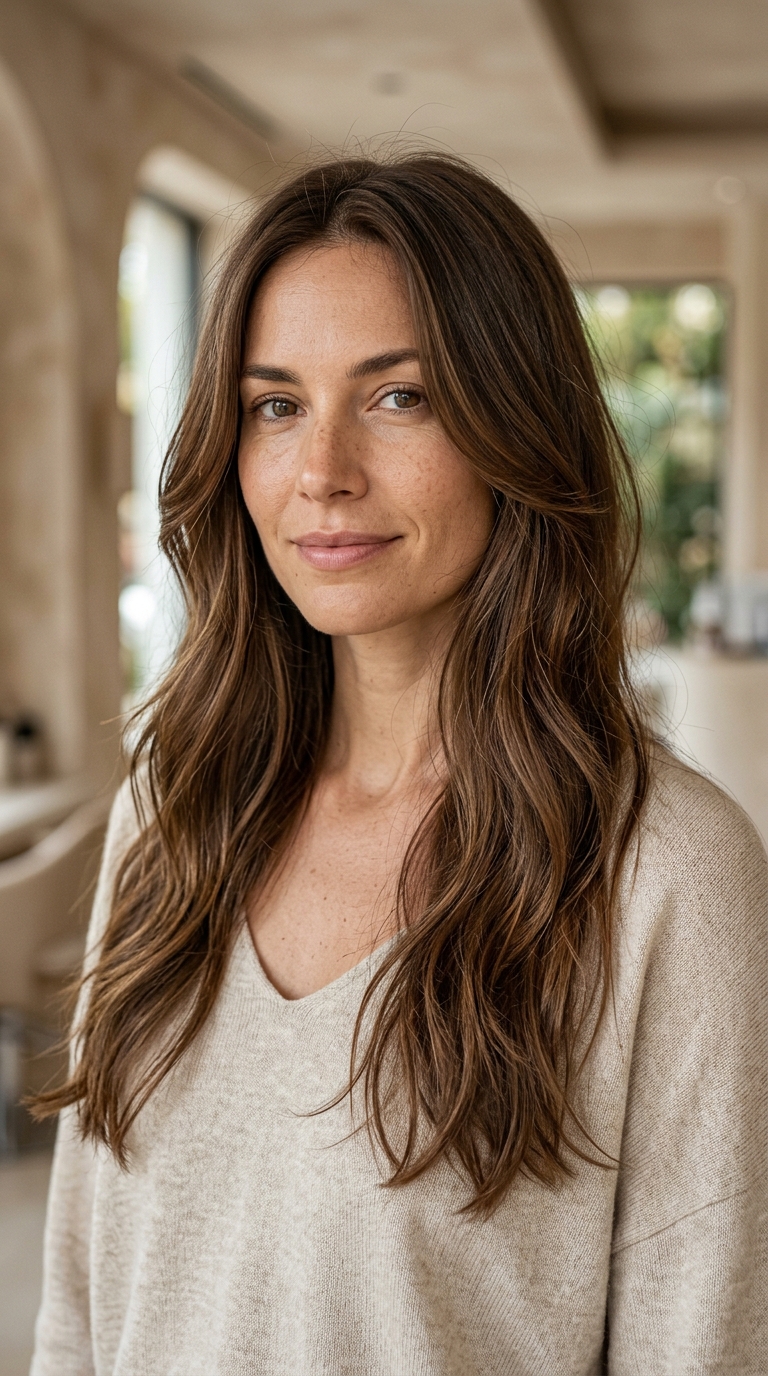
People say round faces should skip layers. That is only half true.
The problem is layers that start at the widest part of the cheeks, since they add volume right where the face is already full. Layers that start below the chin and curve inward do the opposite. They pull the eye down and create a longer line.
Ask for a long, slanted cut that begins near the jaw instead of at the cheekbone. Keep the front pieces smooth rather than puffed up.
Words to bring to your stylist
✅Start the shortest layer at or below my chin.
✅Curve the layers inward, not straight across.
✅Keep the volume low around my cheeks.
✅Show me the front length before you cut it.
5. Face Framing Layers for Long Hair That Is Fine and Straight
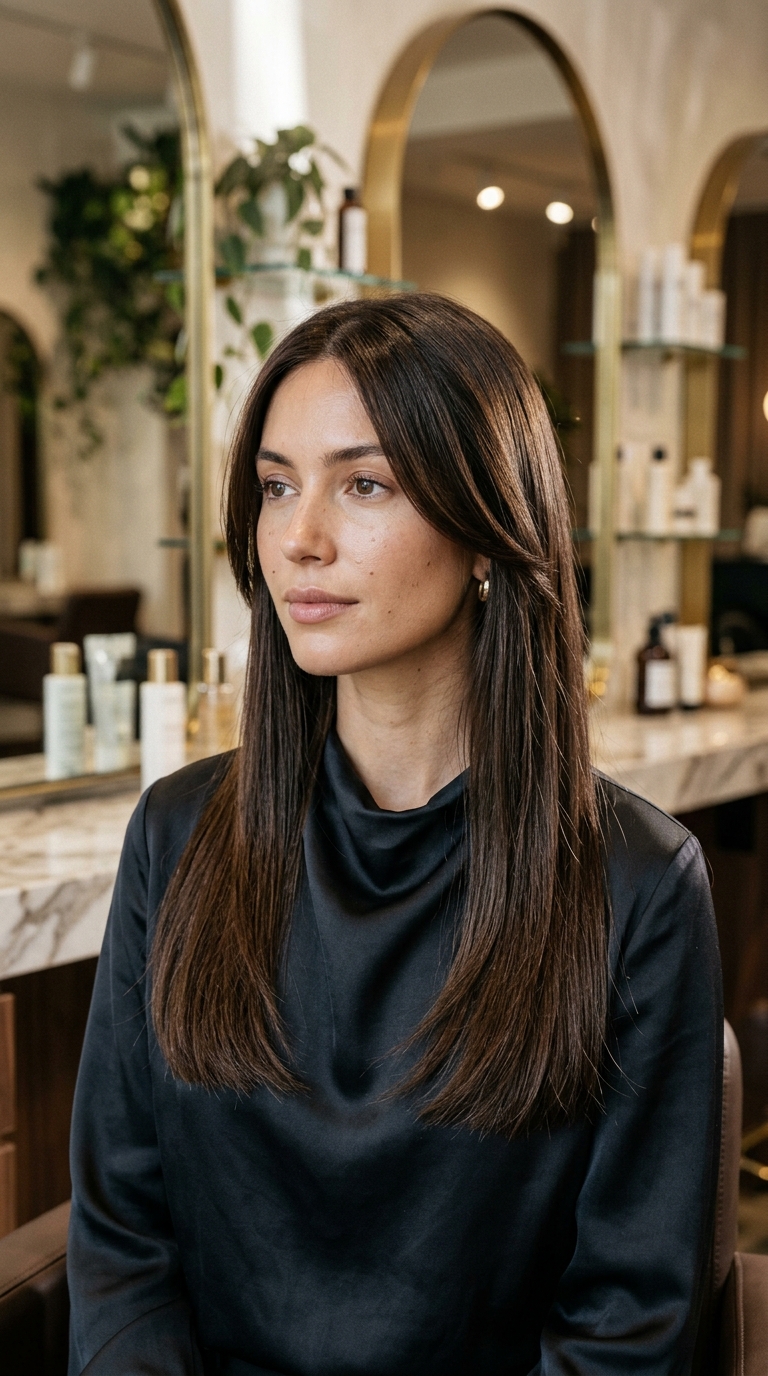
The biggest mistake with fine hair is asking for layers everywhere.
Too many layers can leave the ends thin and see through. Keep the cut to the front only, with two or three short pieces around the cheekbone and the back left blunt. The blunt back keeps the bottom looking full, while the front gives it some movement.
Straight hair shows every line, so ask your stylist to soften the edges with a little point cutting. Your hair will not look thicker overnight, but it will look planned.
✅ Do this
Cut layers in the front only.
Keep the back one blunt length.
🚫 Skip this
Layers running through the whole length.
Heavy thinning on the ends.
Quick Comparison Table: Styles 1 to 5
| Idea | Best For | Effort | Look |
|---|---|---|---|
| 1) Chin-length layers | First timers | Low | ✨ Soft |
| 2) Center part curtain layers | Straight or wavy hair | Medium | 🌿 Open |
| 3) Collarbone layers | Ponytail people | Low | 🕊️ Quiet |
| 4) Curved round face layers | Round faces | Medium | 🌙 Long line |
| 5) Front only fine hair layers | Fine, straight hair | Low | 💫 Light |
6. Side-Swept Layers for a Deep Side Part
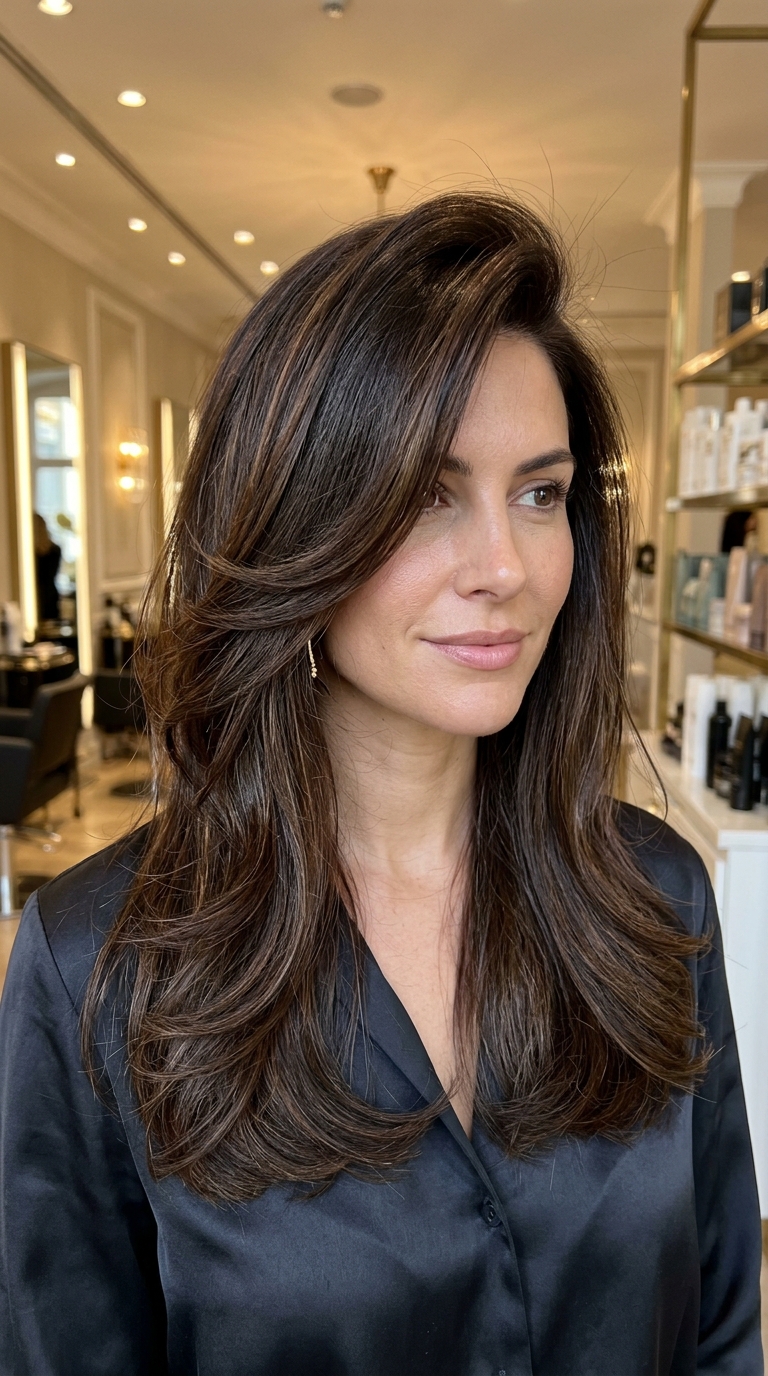
A center part opens the face evenly. A side part does something different.
It puts more hair on one side, so the layers on the heavier side can sweep across the forehead while the other side tucks behind the ear. The look is a little more polished, and the lift at the root helps hair that tends to fall flat.
Start with a part about an inch off center. A deeper part gives more lift, but it also takes more work every morning.
Flip the damp hair over to your part side and blow dry the roots first.
Dry the face framing pieces away from your face with a round brush.
Let the hair fall back and rest the heavier side over your forehead.
7. Curtain Bang Blends for People Who Keep Putting Off Bangs
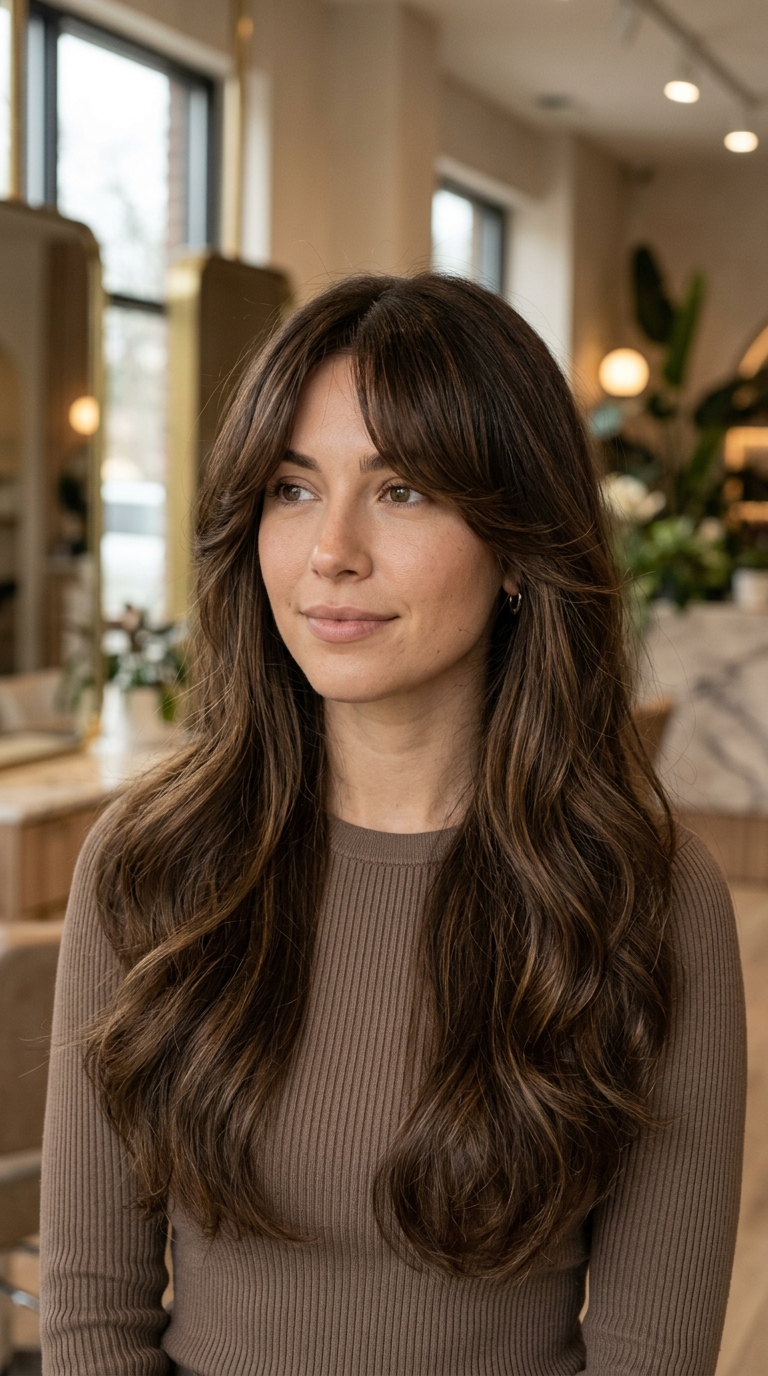
You have saved a dozen bang photos and still have not booked the appointment.
Face framing layers can bridge that gap. The stylist cuts the front pieces long enough to part in the middle, but starting near the brow bone. Pushed to the side, they look like layers. Left forward, they look like soft bangs.
8. Wavy Hair Layers Cut Dry
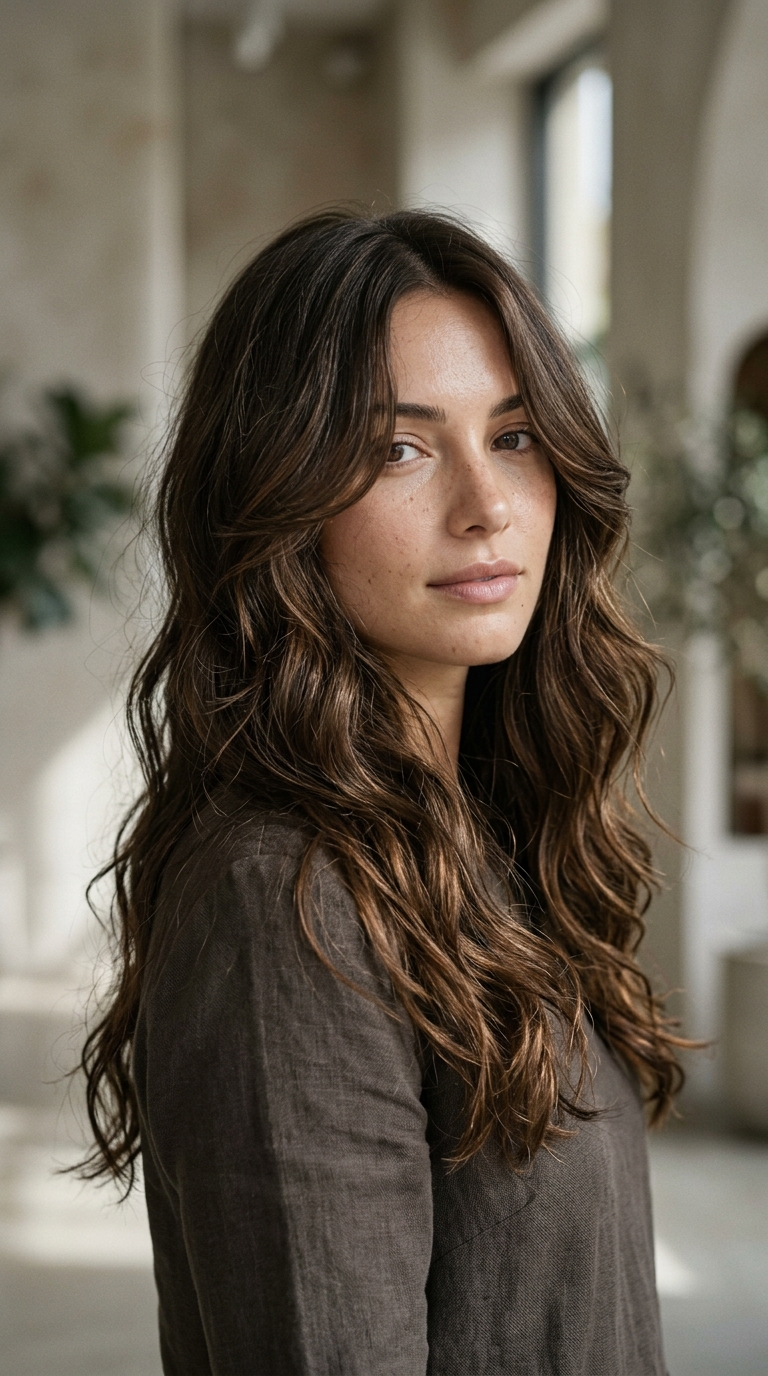
Rule one for wavy hair is to be seen dry.
Waves spring up as wet hair dries, so a layer cut wet can end up a lot shorter than planned. Ask your stylist to check the length when the hair is dry, or to cut a little long and adjust from there.
On waves, face framing layers often work best starting at the cheekbone, since the wave shortens the ends and softens the line on its own.
⚠️ Watch Out
Do not let anyone cut your front pieces to chin length while your hair is soaked. Wavy hair can bounce up a lot as it dries, and short pieces are hard to take back.
9. Curl by Curl Layers for Curly Hair
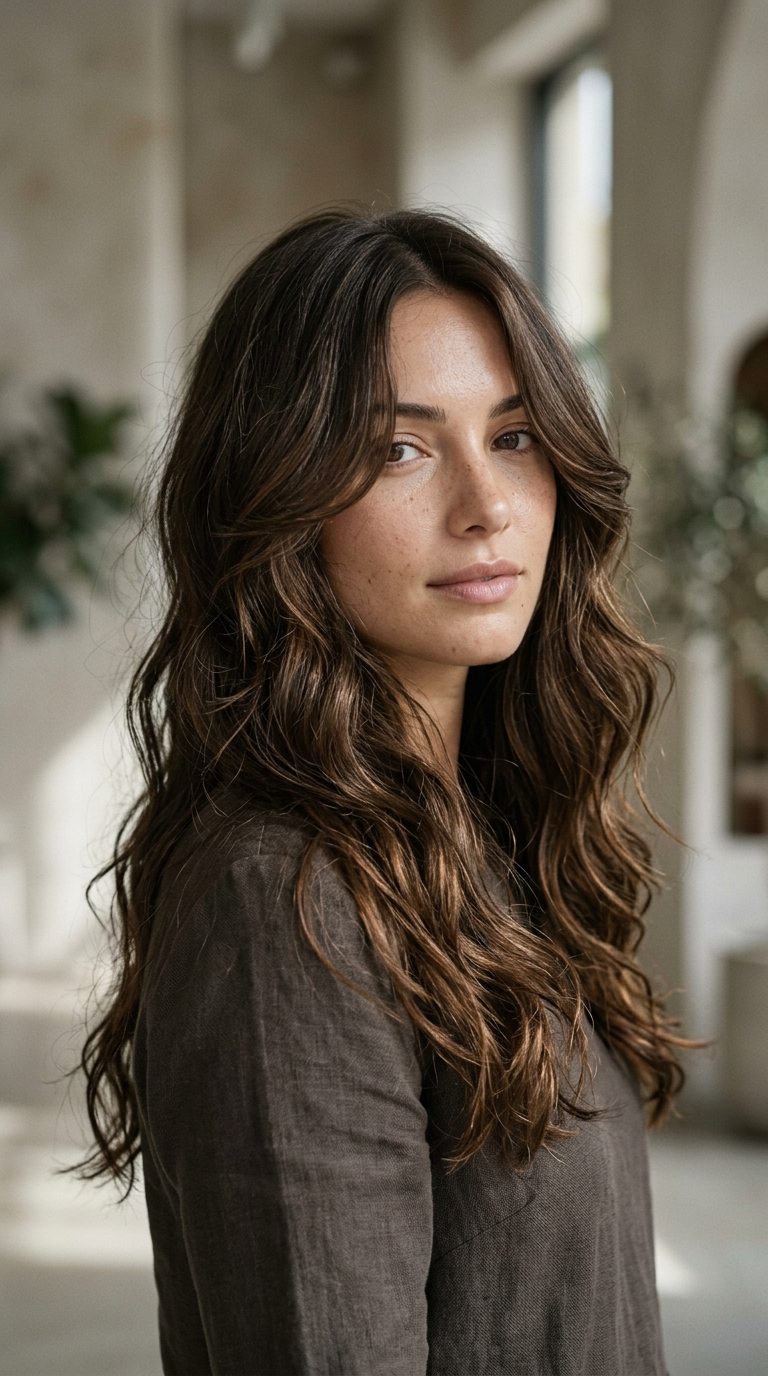
Curls do not follow rules the way straight hair does.
A stylist who works with curls will often cut dry, one curl at a time, so each piece lands where it will actually sit. A cut that looks fine when stretched straight can leave odd gaps once the curls spring back.
Face framing layers help because they stop the sides from stacking into a triangle. Short curls near the face lift upward, so go a little longer than you think you need.
THE ONE THING TO REMEMBER
Book a stylist who cuts curls every day, and ask for the front to be cut dry.
10. Grown Out Bangs Turned Into Face Framing Layers
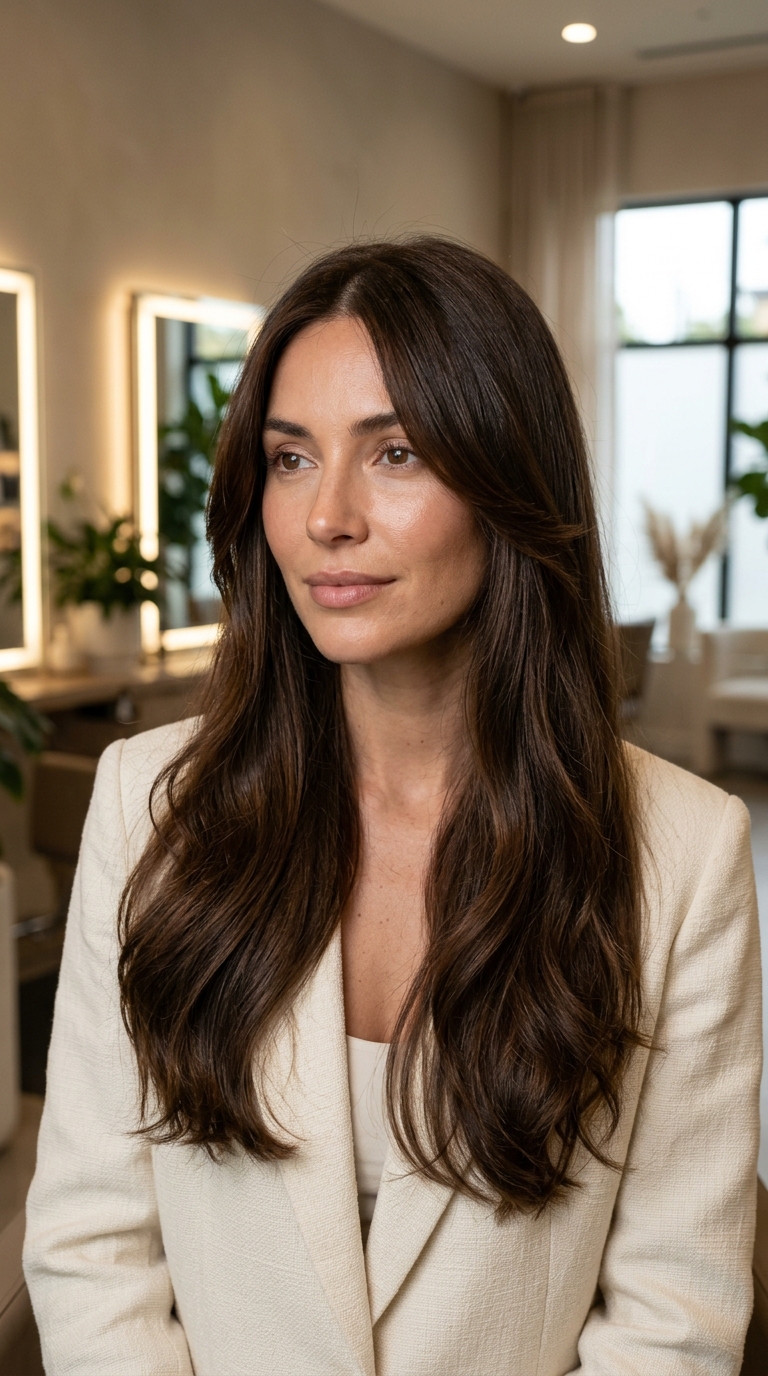
Grown out bangs are awkward for a while, then surprisingly useful.
They sit between the eyebrows and the cheeks, which is almost exactly where face framing layers begin. Instead of pinning them back, ask your stylist to blend them into the sides with a slight slant.
You keep the length you worked to grow and skip the in between stage.
- ▸Blend the bangs into the side pieces.
- ▸Keep the shortest piece at the cheekbone.
- ▸Slant the cut downward, not straight across.
- ▸Leave the back length untouched.
Quick Comparison Table: Styles 6 to 10
| Idea | Best For | Effort | Look |
|---|---|---|---|
| 6) Side-swept layers | Hair that falls flat | Medium | 💫 Polished |
| 7) Curtain bang blend | Bang curious | Low | 🌸 Soft |
| 8) Wavy layers cut dry | Wavy hair | Medium | 🌊 Relaxed |
| 9) Curl by curl layers | Curly hair | High | 🌀 Bouncy |
| 10) Grown out bang layers | Growing out a fringe | Low | 🌿 Natural |
Short Q&A
Will face framing layers make my hair look thinner?
Not if they stay in the front. Layers that run through the whole length can thin out the ends, but a few short pieces around the face leave the back full.
How often will I need a trim?
Short front pieces show growth faster than the rest of your hair. Many people book a quick front trim between full haircuts. Ask your stylist what they suggest for your hair.
Can I get these while growing my hair out?
Yes. The shortest layers sit near the face, so you keep almost all of your back length.
What should I tell my stylist?
Say where you want the shortest piece to land, such as the chin or the cheekbone, and bring a photo. A word like “short” means something different to everyone.
Final Thoughts
Face framing layers do a lot with very little. They keep the length you have grown, they bring some shape to the front, and they give a flat haircut a reason to move.
Pick the one that matches your hair, not just the photo. Fine hair needs a lighter hand, curls need patience, and round faces need layers that start lower. The best face framing layers long hair can get are the ones you will actually style on a normal Tuesday.
Save this list for your next salon visit, so the right words are ready when you sit in the chair.