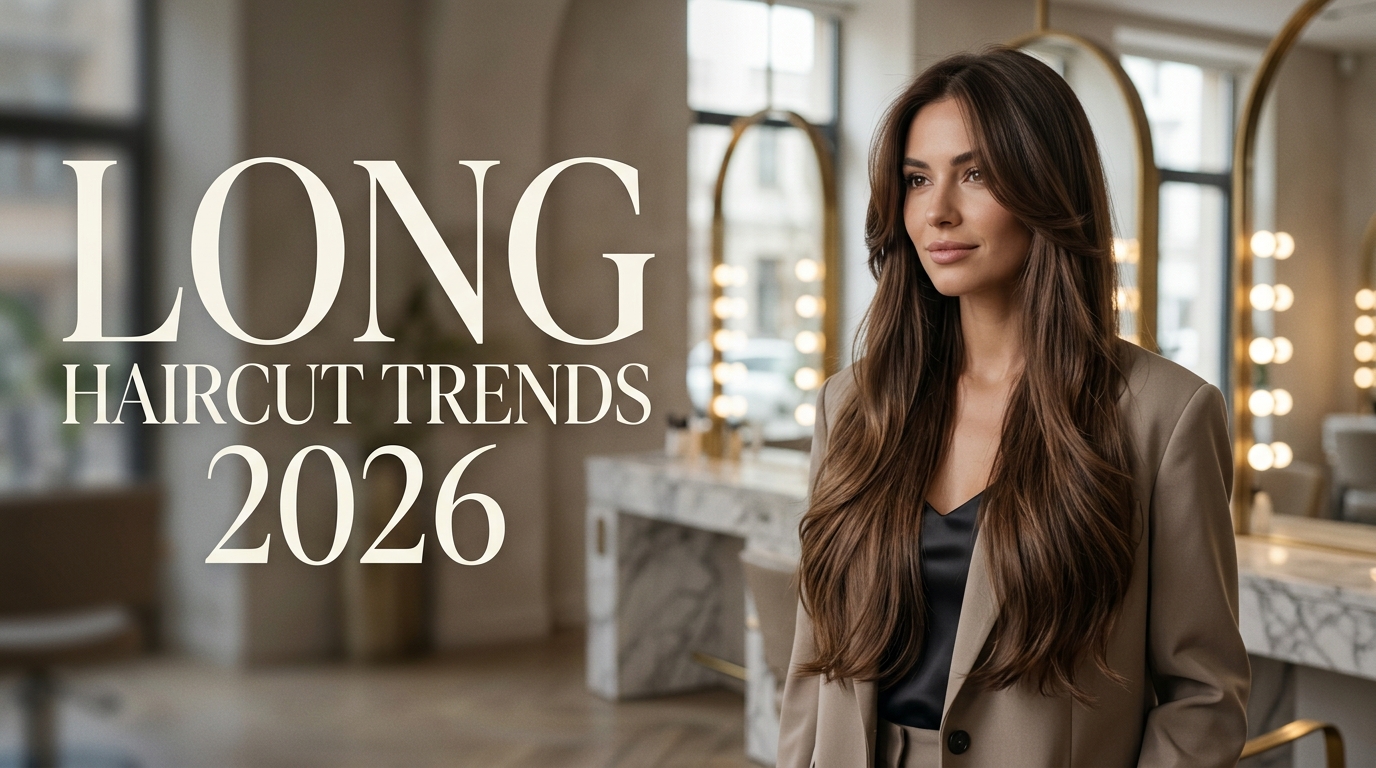
10 Long Haircut Trends 2026 to Try Now
Asking for long layers and nothing else is how most people end up with a cut they did not want. Stylists fill in the blanks, and the blanks are where things go wrong. A photo helps, but a photo of someone else’s hair type only gets you so far.
The fix is simple. Know the shape you are asking for, where the shortest piece should land, and how much styling you will actually do. That is what this list of long haircut trends 2026 is built around. Each idea below explains what the cut does, what to tell your stylist, and how it looks on different hair types.
Nothing here asks you to give up your length. Some cuts add movement, some add fullness, and one just clears away split ends so your length can keep growing. Save the ones that match your hair, then bring photos to your next appointment.
Quick Look: What’s Inside
1. Butterfly Layers That Add Movement Without Cutting Your Length
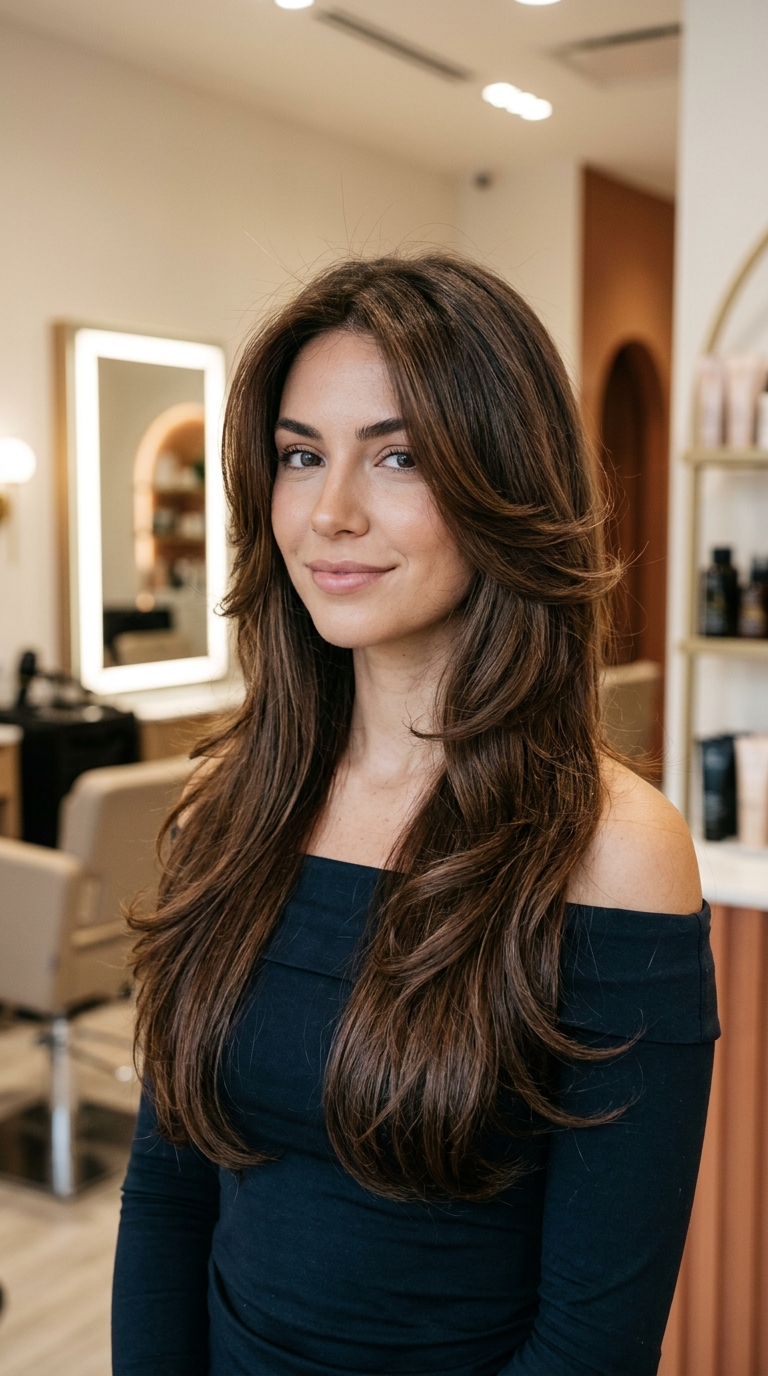
Long hair can hang like one flat curtain, and butterfly layers break that up without costing you inches.
The stylist cuts shorter layers around your face and crown, then blends them into longer layers underneath. The back stays long. The front gets bounce, especially after a round brush blow dry.
Tell your stylist three things:
- Where the shortest layer should land, usually chin or collarbone
- That the back should keep its length
- That you want soft blending with no visible steps
Ask to see the layers dry before you leave the chair, since that is when the shape really shows up.
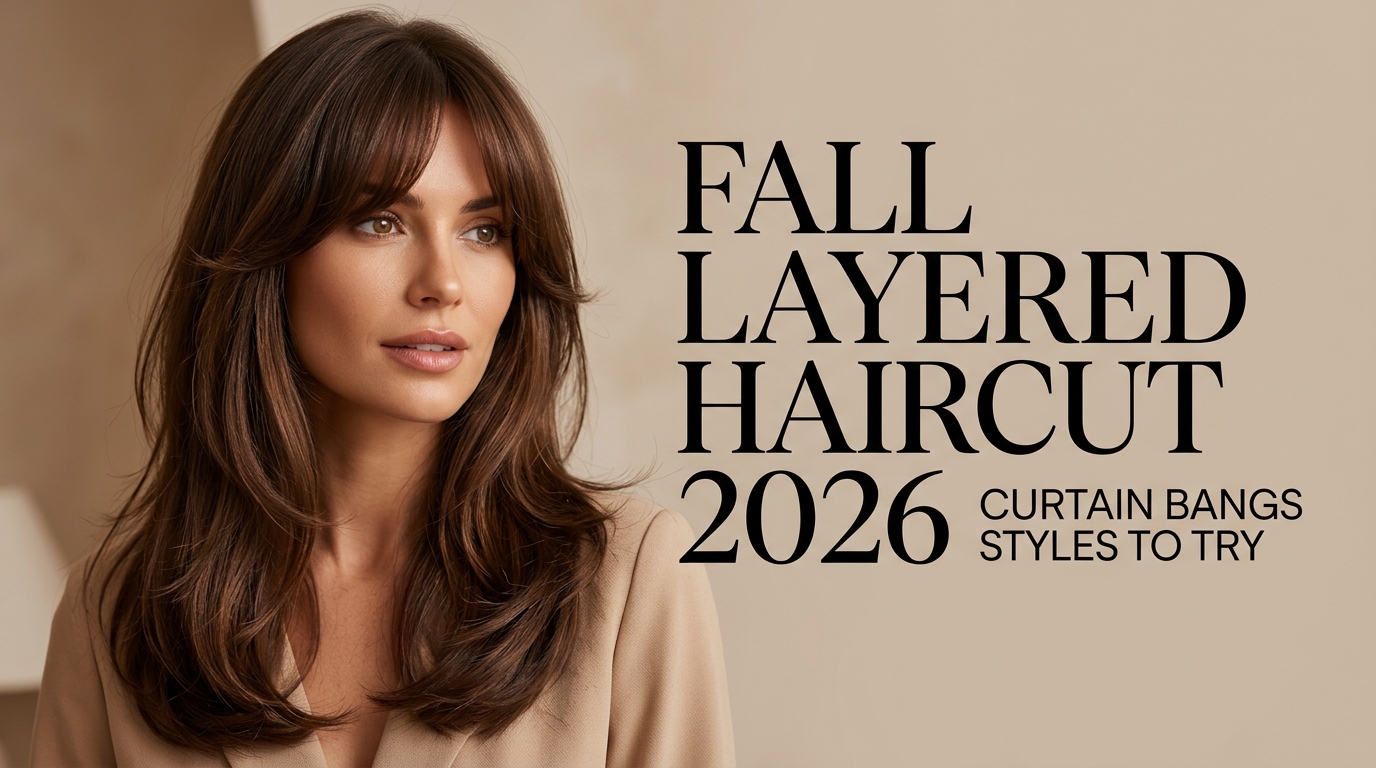
2. Curtain Bangs That Blend Into Your Length So Growing Out Is Painless
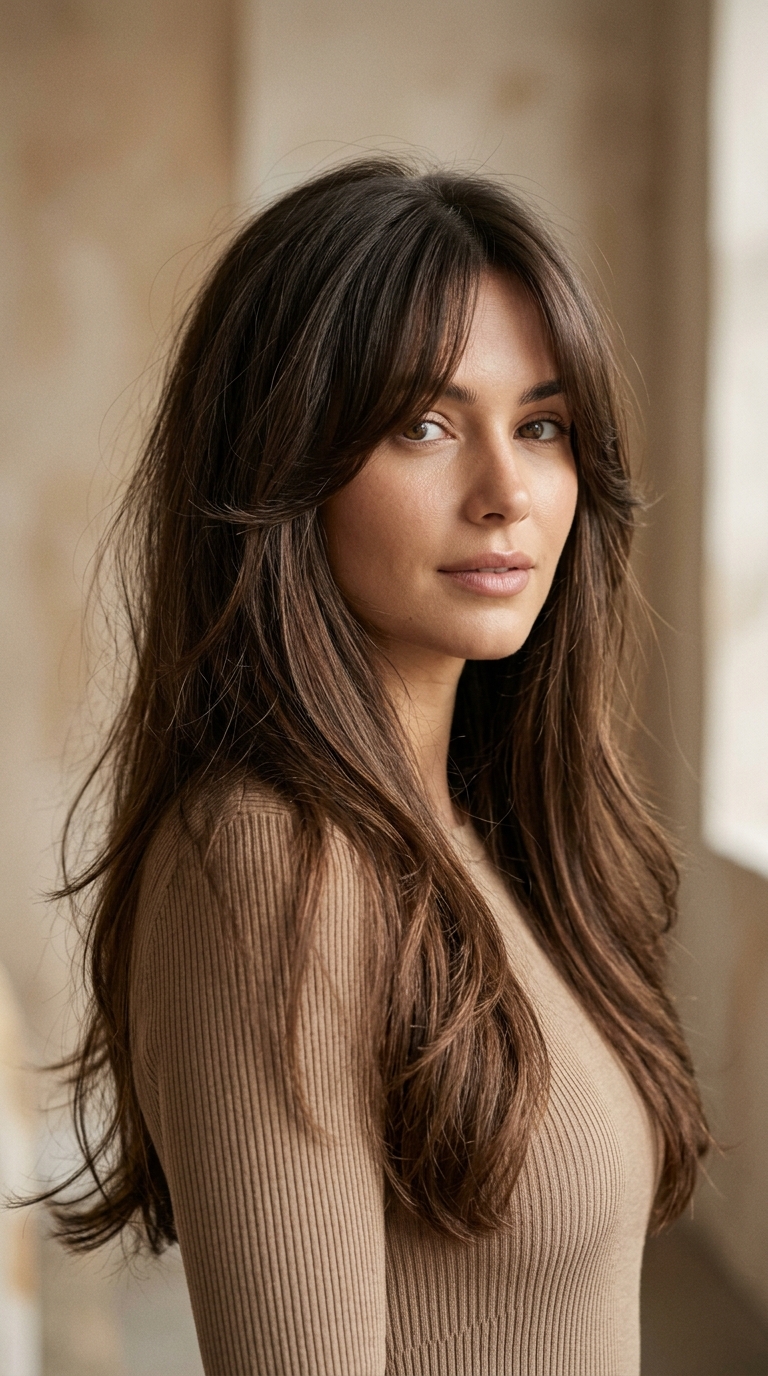
Most people skip bangs because of the awkward grow out phase. Curtain bangs are the exception. They part in the middle and sweep to each side, so there is no blunt line to hide while they grow.
Ask for them to start around cheekbone length and taper into your side layers. As they grow, they simply turn into face framing pieces.
Your cowlick matters here. If your hairline swirls at the front, say so before the first snip so the stylist can cut with the grain, not against it.
💡 Quick Tip
Style your bangs first, while the hair is still damp. Roll a medium round brush away from your face as you dry. Bangs set fast, and doing them first saves the rest of your routine.
3. The Blunt, Glossy One Length Cut With a Softened Edge
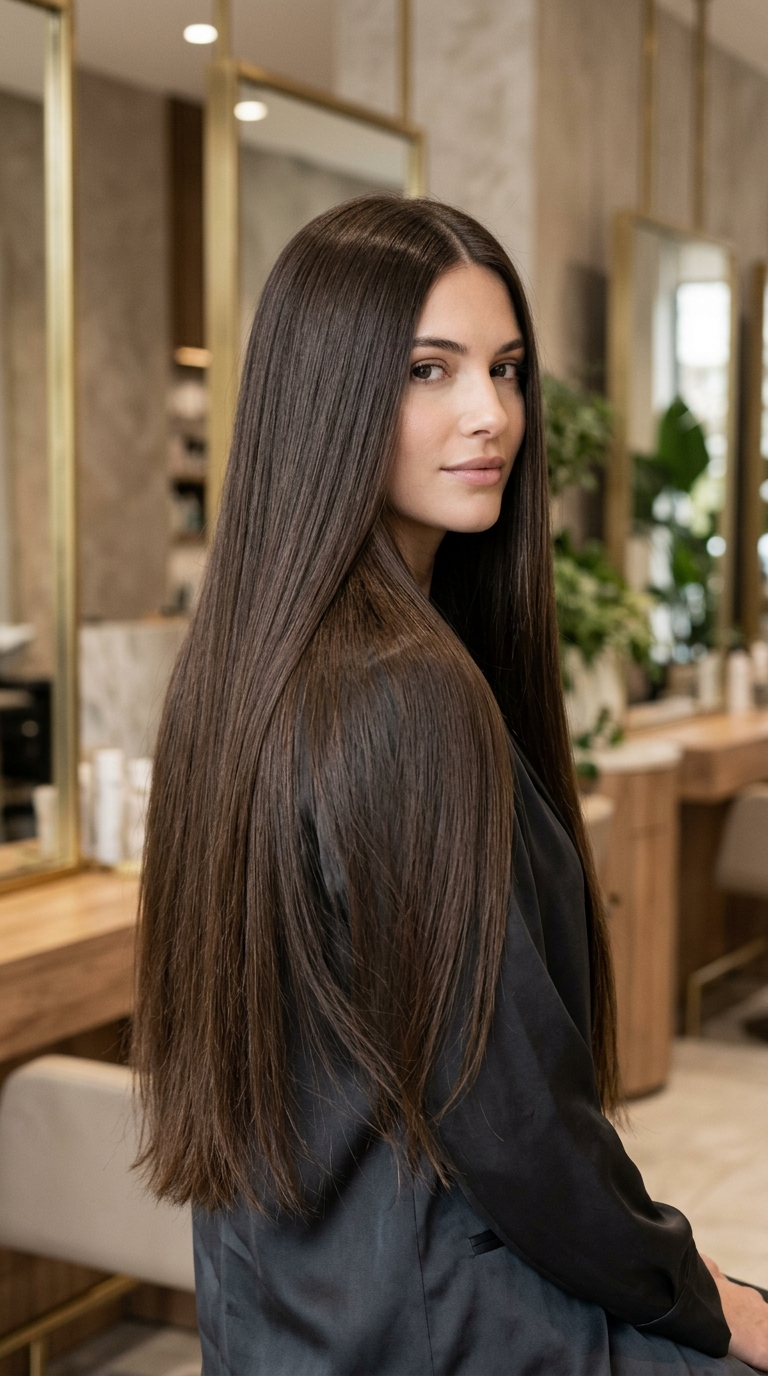
Light bounces off a straight, solid hemline, and that is why blunt cuts look so glossy.
A razor sharp edge can feel severe on very long hair, though. Ask for a slightly softened line, where the stylist point cuts into the ends so they look thick but not harsh.
This cut works best on hair that is healthy and fairly straight. Waves and frizz can hide the clean line you are paying for.
Skip heavy layering here. The whole point is one clean shape.
Months without a trim leave the ends thin and see through, and the whole length sits flat.
A softened, even hemline looks thicker, catches the light, and keeps the length you worked for.
4. A Long Shag With Wispy Ends and Easy Air Dry Texture
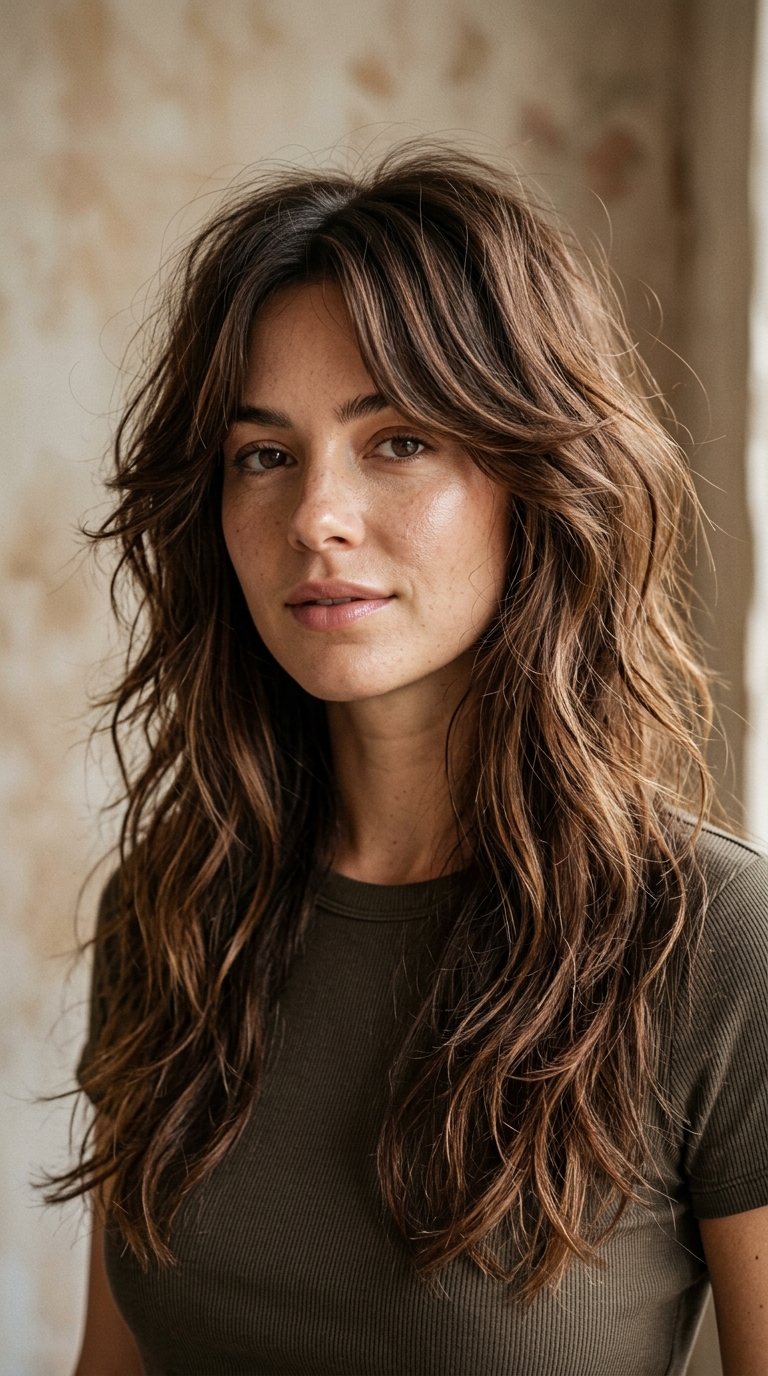
Scrunch, then leave it alone. That is most of the routine for a long shag.
The cut uses choppy, wispy layers through the whole length, with the most lift around the crown. It suits waves and natural bends best, since the layers give your texture room to show.
Straight hair can still wear it, but expect to reach for a curling iron on some mornings.
Here is the air dry routine:
Work a light mousse or sea salt spray through towel dried hair.
Scrunch upward toward the roots, or twist loose sections around your finger.
Let it air dry, or use a diffuser on low heat. Do not brush it.
Once dry, rub a tiny bit of cream between your palms and pinch it through the ends.
5. Hidden Layers That Make Thin Hair Look Fuller
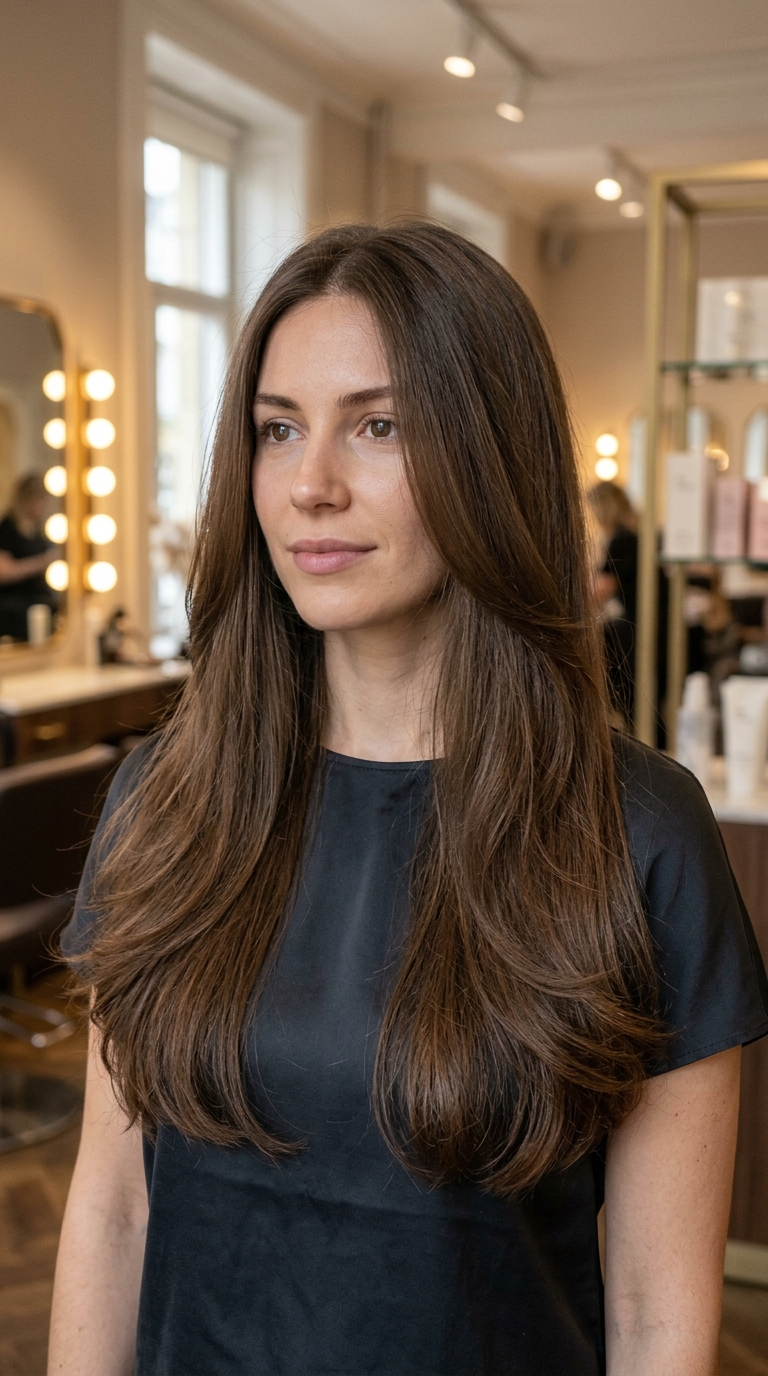
Layers make thin hair look thinner. That is the belief, and it is only half true.
Lots of visible layers can pull weight off the ends and leave them wispy. Hidden layers work the opposite way. A few shorter pieces are cut underneath, so the top layer stays long and the lower hair gets lift and body.
Ask for:
- Two or three subtle layers at most
- Layers cut underneath, not on the surface
- Ends that stay dense, with no thinning shears
If your ends already look see through, a slightly blunter hemline helps more than extra layers.
Quick Comparison Table: Styles 1 to 5
| Idea | Best For | Effort | Vibe |
|---|---|---|---|
| 1) Butterfly Layers | Straight to wavy hair | Medium | 🦋 Bouncy |
| 2) Curtain Bangs | Most face shapes | Low | 🌸 Soft |
| 3) Blunt Glossy Cut | Straight, healthy hair | Low | ✨ Sleek |
| 4) Long Shag | Wavy and curly hair | Medium | 🌿 Tousled |
| 5) Hidden Layers | Fine or thin hair | Low | ☁️ Full |
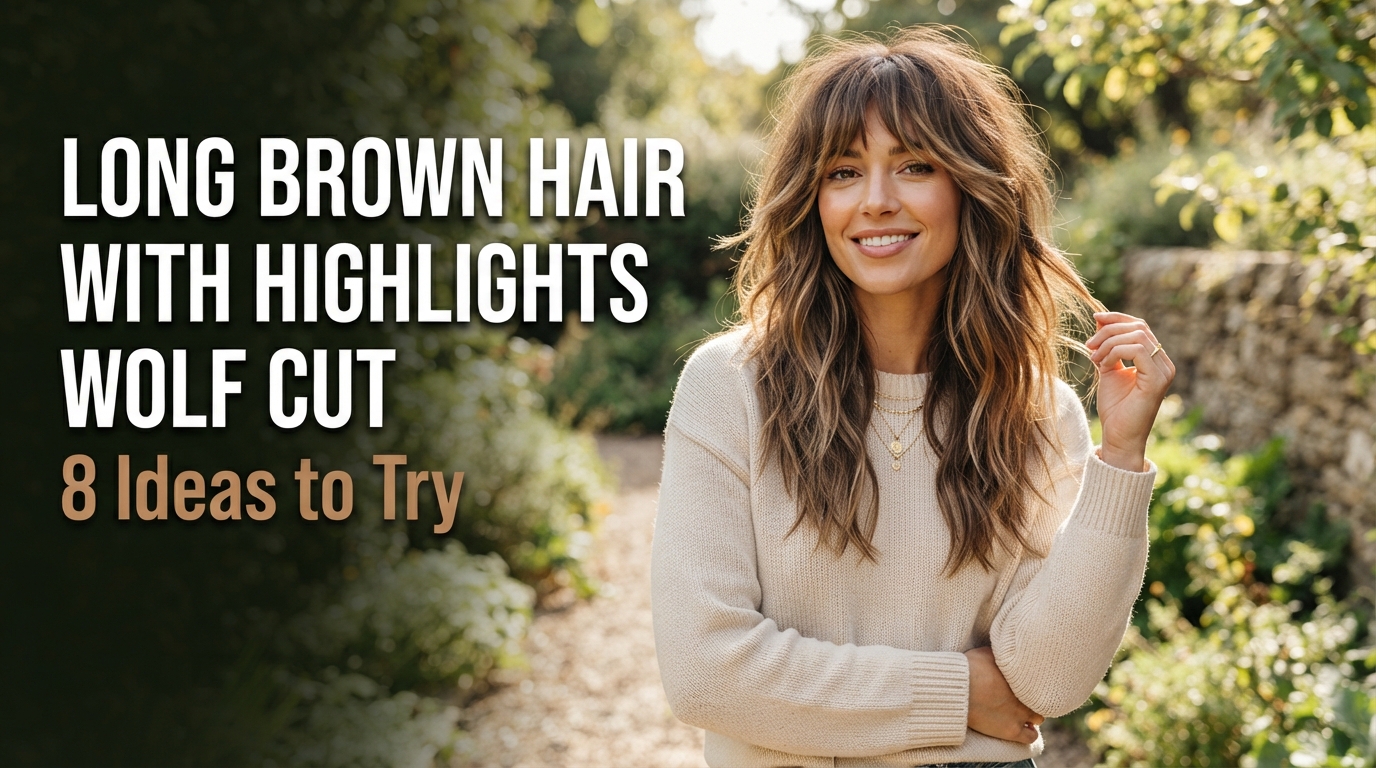
6. The Long Wolf Cut for Anyone Tired of Safe Hair
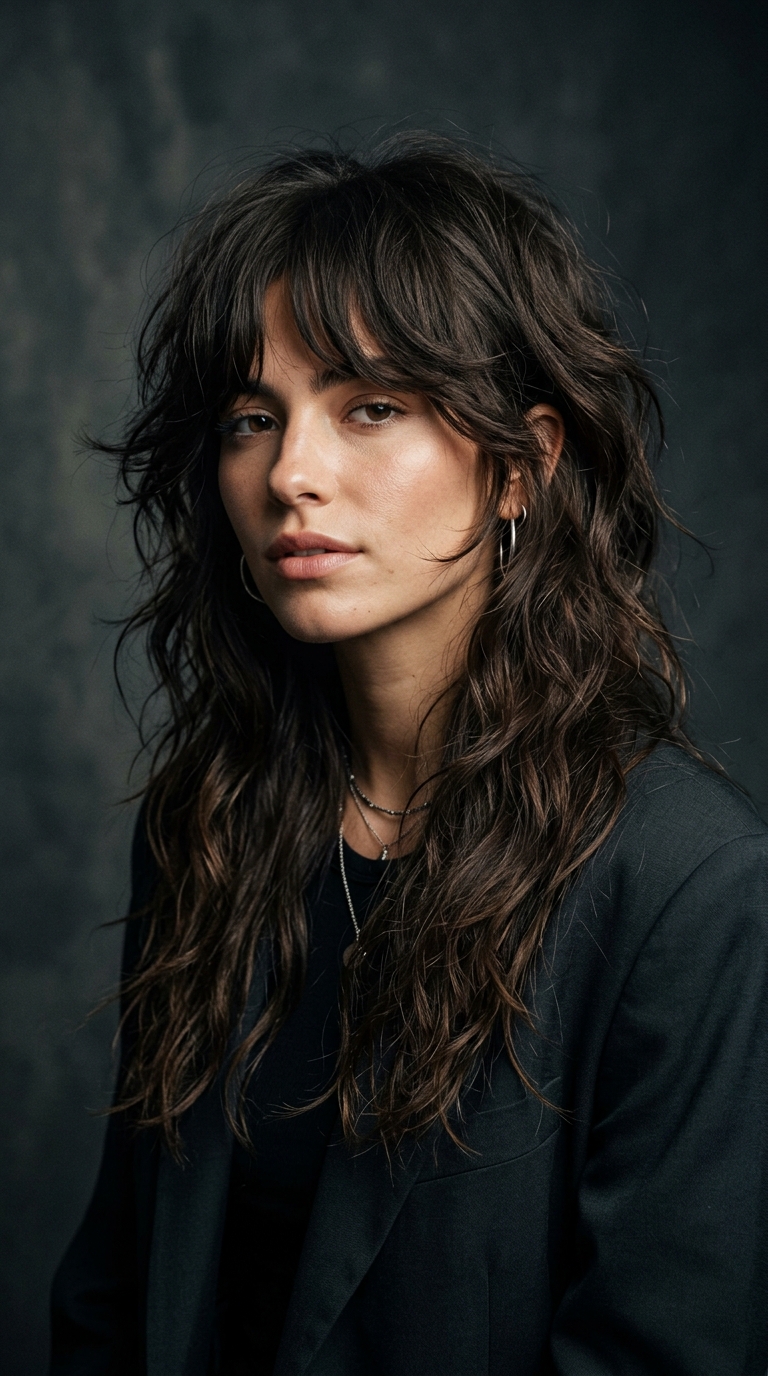
The most common wolf cut mistake is letting the crown layers go too short on long hair, so the cut stops looking long at all.
The long version keeps the shaggy top and wispy ends, but the shortest layer stays around the cheeks or chin and the back keeps its length. Wavy and thick hair handle it best because they fill out the layers.
Expect a messy phase while it grows out, so plan a shaping trim every few months.
Bring this to your appointment:
Salon prep list
7. A Rounded U Shaped Hemline That Keeps Ends Looking Full
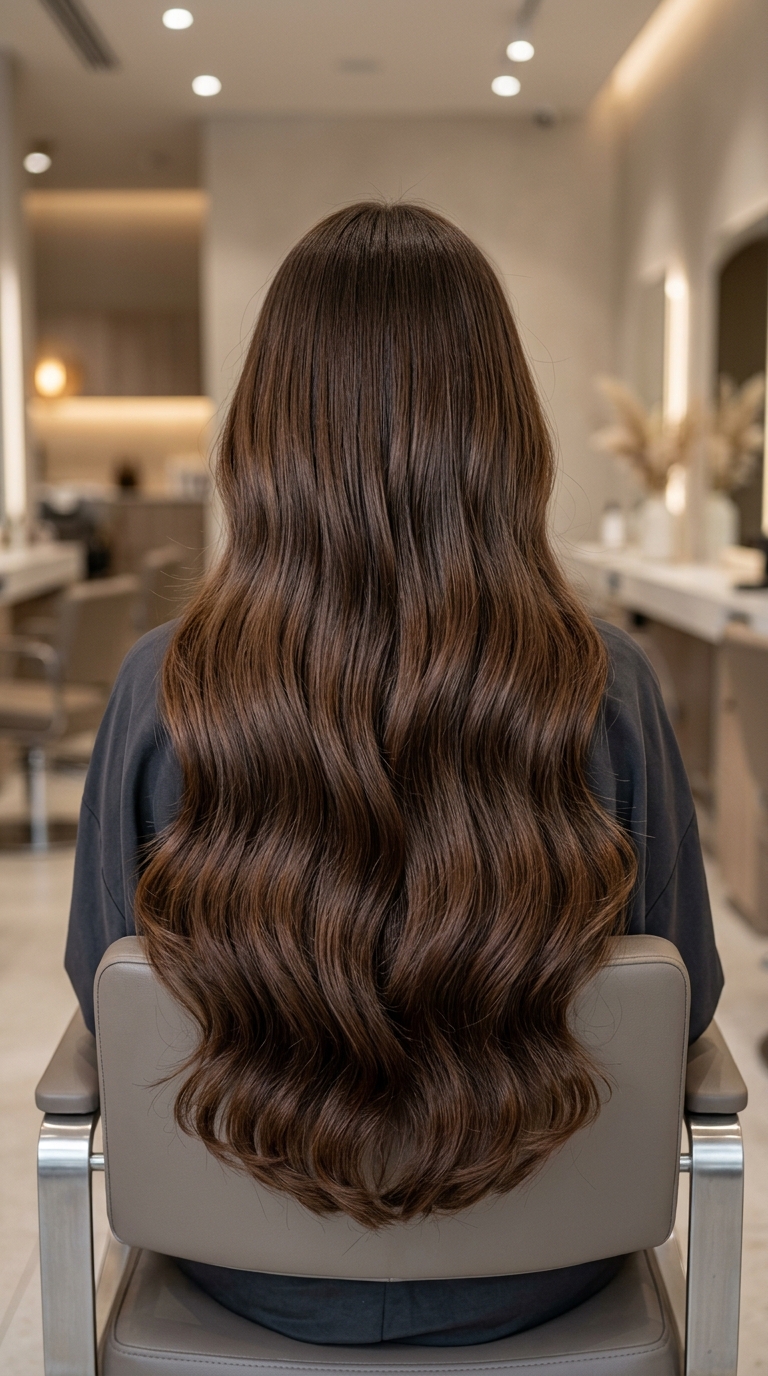
Keep the longest point of the U at the center back. That is the whole rule.
A U shaped hemline curves from that longest point up toward the sides, which makes the ends look fuller when hair is worn down. It reads softer than a straight line and heavier than a V shape.
Stylists can cut it with layers or without. The curve should be gentle, because a deep scoop leaves thin, stringy points at the back.
It looks best with loose waves or a smooth blow dry.
Ask for a gentle curve with the longest point at center back.
Show a photo taken from behind, not just the front.
A steep scoop that leaves long, thin points behind.
Skipping trims, since the curve loses its shape as it grows.
8. A Curly First Long Cut That Shapes Each Curl Pattern
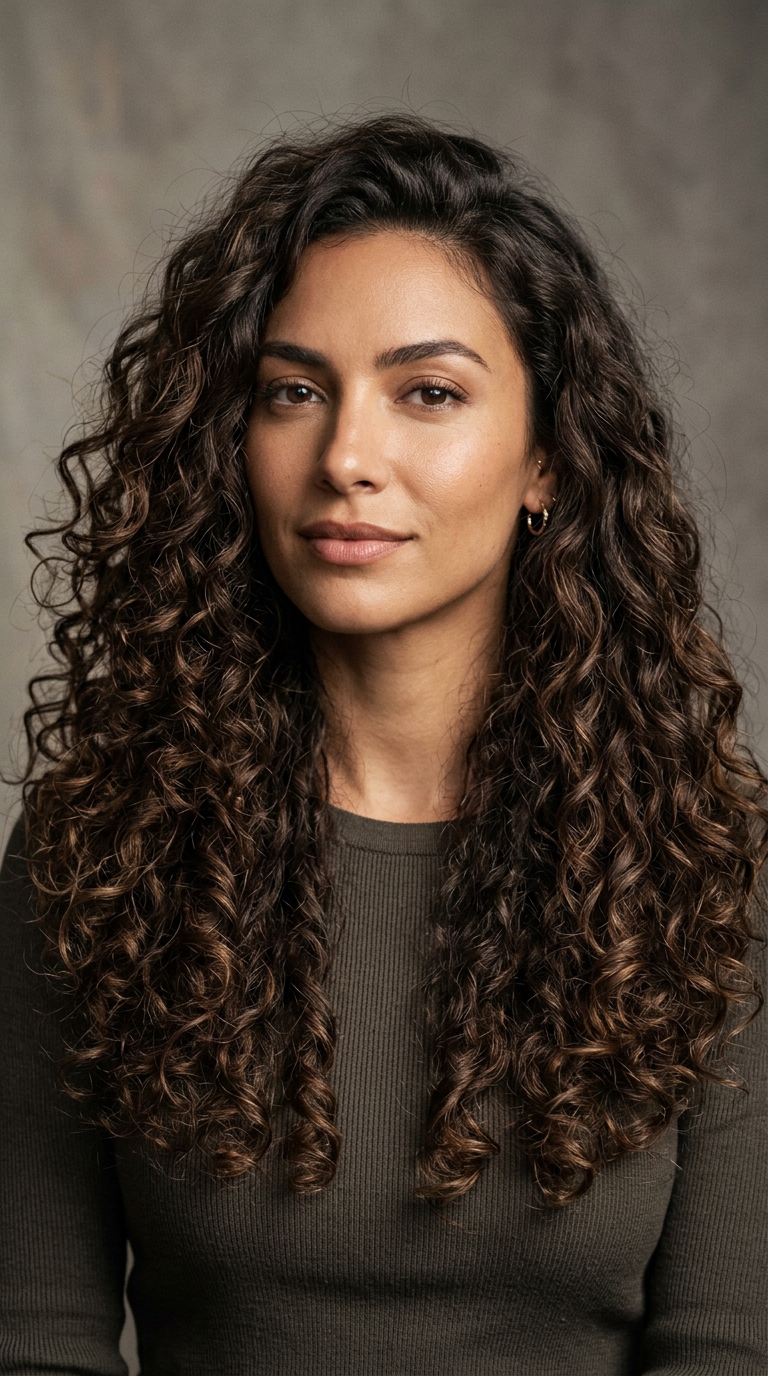
Curly hair looks longer wet than dry, and that catches a lot of people off guard.
Curls spring up as they dry, so a cut that looks right while wet can land well above where you expected. For a first long cut, book a stylist who works with curls and ask them to cut dry or curl by curl.
Tell them to leave extra length. You can always go shorter next time. You cannot add it back.
⚠️ Watch Out
Hair that is stretched straight and cut wet can spring back much shorter than planned. Before you book, ask how the stylist cuts curls, and look at photos of their work on hair like yours.
9. The Bouncy 90s Style Blowout Cut With Big Face Framing Layers
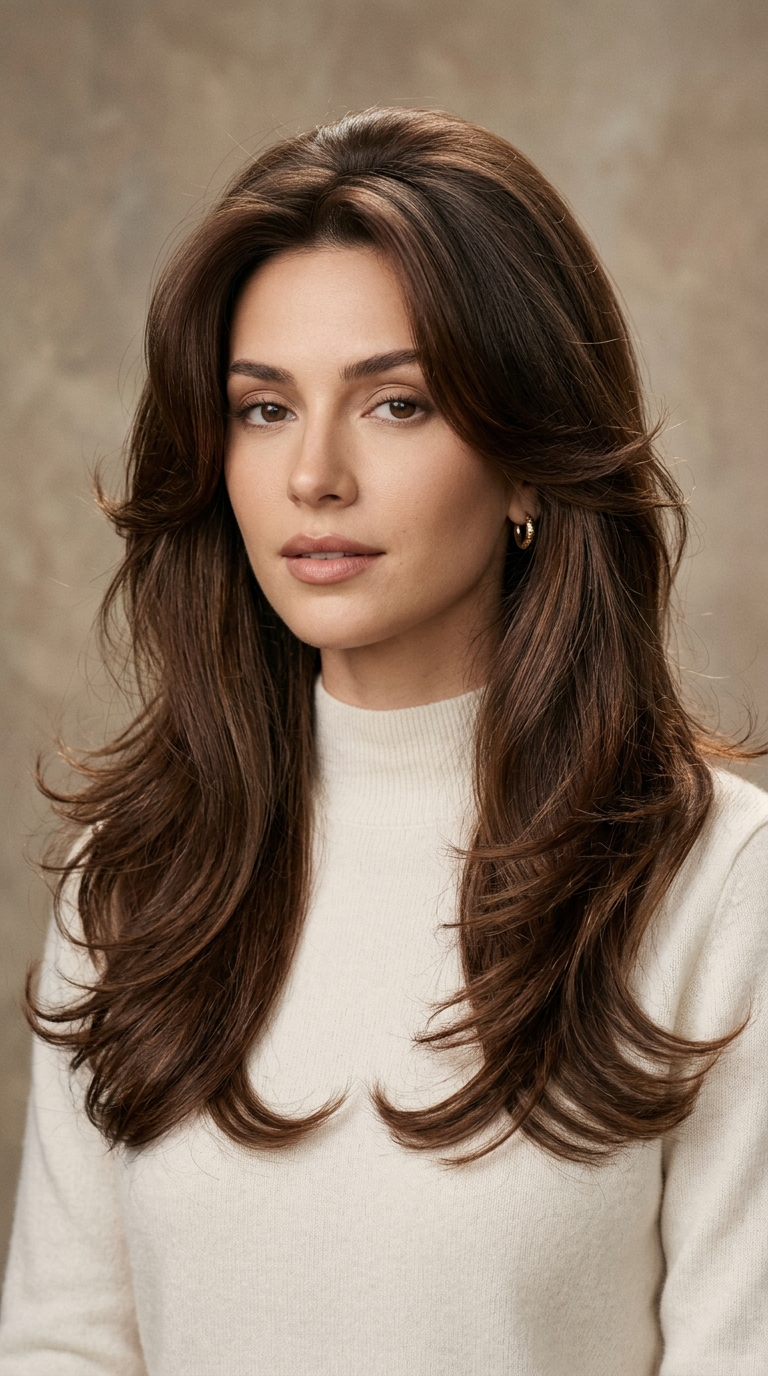
At the salon, the stylist wraps a section around a big round brush and holds it for a few seconds. That held tension is where the bounce comes from.
The cut itself uses long layers that start around the chin, plus longer face framing pieces. Hair needs enough length for the brush to wrap and curl under or flip out.
What you need at home:
- A large round brush
- Heat protectant
- Clips to keep dry sections out of the way
Skip fine tooth combs after styling. They flatten the shape.
The layers give you the shape, but the bounce comes from drying each section under tension and letting it cool before you touch it.
10. Hair Dusting Trims to Keep Your Length and Lose Split Ends
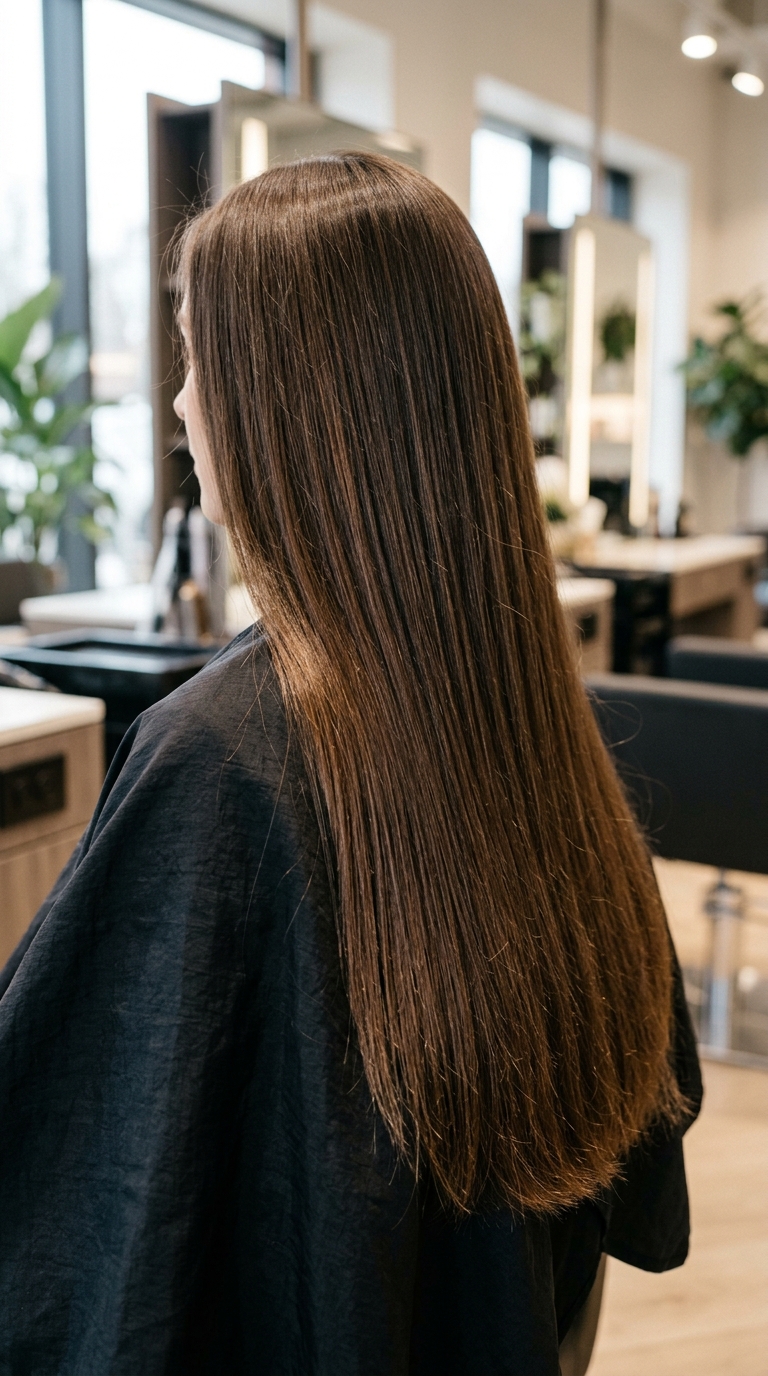
Dusting removes split ends and keeps nearly all your length. It is the trim for anyone growing hair out.
Instead of cutting one straight line, the stylist twists small sections and snips only the frayed bits that stick out. You leave with almost the same length, and the ends look clean.
It cannot fix damage that runs up the strand, so a real trim still has its place. Dusting just stretches the time between them.
Start with clean, dry, fully straight hair so the frayed ends are easy to spot.
Twist a small section until the split ends pop out along the twist.
Snip only the fuzzy pieces sticking out. The main length stays untouched.
Work around the whole head, then check the ends in the mirror.
Quick Comparison Table: Styles 6 to 10
| Idea | Best For | Effort | Vibe |
|---|---|---|---|
| 6) Long Wolf Cut | Wavy or thick hair | Medium | 🐺 Edgy |
| 7) U Shaped Hemline | Fine to medium hair | Low | 🌙 Full |
| 8) Curly First Long Cut | Curly and coily hair | Medium | 🌀 Defined |
| 9) 90s Blowout Layers | Straight to wavy hair | High | 💫 Bouncy |
| 10) Hair Dusting | Anyone growing length | Low | 🌱 Healthy |
Short Q&A
How often should I trim long hair? Every two to three months is a common rule of thumb. Fine or damaged hair may need it sooner, and dusting can fill the gaps in between.
Will layers make my hair look shorter? Not if the back stays long. Layers move weight around, so tell your stylist you want to keep your length and only add shape.
Which cut is the easiest to maintain? The blunt cut and hair dusting ask for the least styling. Both mostly need regular trims to stay neat.
What should I bring to my appointment? Photos of the cut on hair like yours, ideally dry and from more than one angle. Add a quick note on how much time you will spend styling each day.
Conclusion
Good hair days start in the salon chair, not in front of the mirror. When you know the shape you want, where the shortest layer should fall, and how much styling you will really do, the cut is far more likely to match the photo on your phone.
Pick the long haircut trends 2026 that suit your own hair type, not just the ones that look good online. Fine hair, curls, and waves all want different things, and the tables above make that easy to compare.
Save this list for your next salon visit, so you can find it before you book.