10 Winter Haircuts for Women That Are Easy to Style
Hat hair is real, and winter makes it worse. Your beanie flattens the crown, your scarf kicks the ends out sideways, and dry indoor heat sends static through everything.
Most advice on winter haircuts for women says to grow it long and tie it back. That works until you want your hair down, and then you are stuck with limp, tangled lengths. A better plan is a cut that already handles the cold. It sits right under a scarf, bounces back after a hat, and dries without a long blow dry session.
The ten cuts below are chosen for exactly that. Some are short, some are long, and a few work on curls. Each one comes with a styling note, a quick visual, and a clear idea of who it suits, so you can walk into the salon knowing what to ask for.
Quick Look: What’s Inside
1. The Angled Lob That Clears Your Scarf

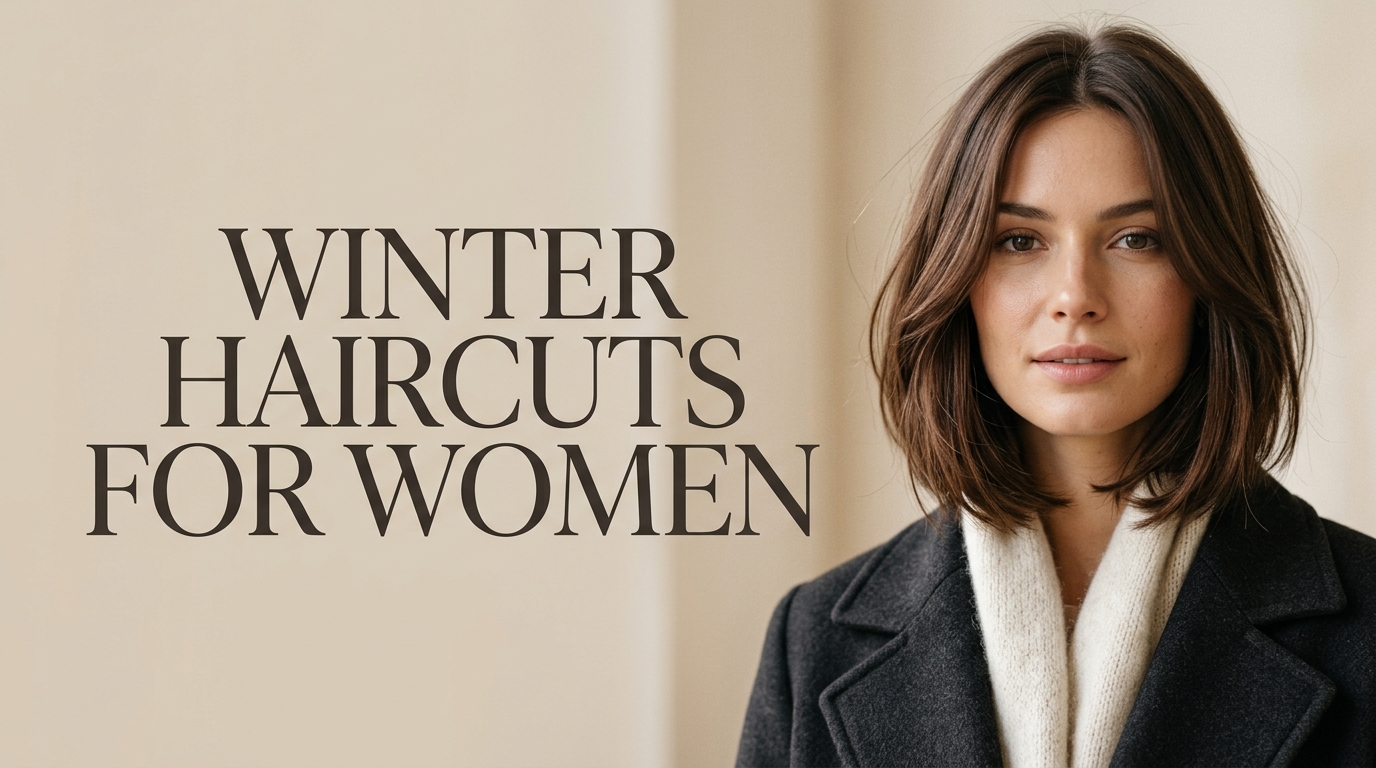
A lob that stops just above the collarbone is the easiest answer to scarf season.
Ask for a slight angle, a little longer in front than in back. The front pieces swing forward and stay clear of your coat collar, so nothing gets crushed or tangled. Wool rubs shorter hair into static, and the clean edge hides that frizz better than ragged ends do.
What to tell your stylist:
- Stop the length half an inch above the collarbone
- Keep the front a touch longer than the back
- Add light texture at the ends so it does not look stiff
2. Long Layers That Spring Back After a Beanie

The flat crown is the whole problem with long hair and a hat.
Long layers that begin around the chin give the top a little lift, so the shape bounces back once the beanie comes off. Keep the layers soft and blended. Short, choppy ones near the crown poke out in odd directions after a hat.
Face framing pieces help too, since they cover the dent a hat leaves across the forehead.
Best for medium to thick hair that feels heavy and straight down.
💡 Quick Tip
Spray a little texture spray at the roots before the hat goes on. When you take it off, lift the roots with your fingertips and flip your part to the other side for instant volume.
3. A Shaggy Bob for Thick Hair That Puffs Out

Most thick haired women get the one length bob and then fight a triangle shape all winter.
The shaggy bob fixes that by removing weight from the inside. Ask for internal layers, which are cut within the hair instead of along the outside edge. The result sits closer to the head and moves with a scarf instead of fighting it.
It looks best a little undone. Skip the flat iron and let it dry rough.
A one length bob that flares wide at the bottom and bunches up against a scarf.
A shaggy bob with internal layers that sits closer to the head and moves easily.
4. Curtain Bangs You Can Tuck Under a Hat
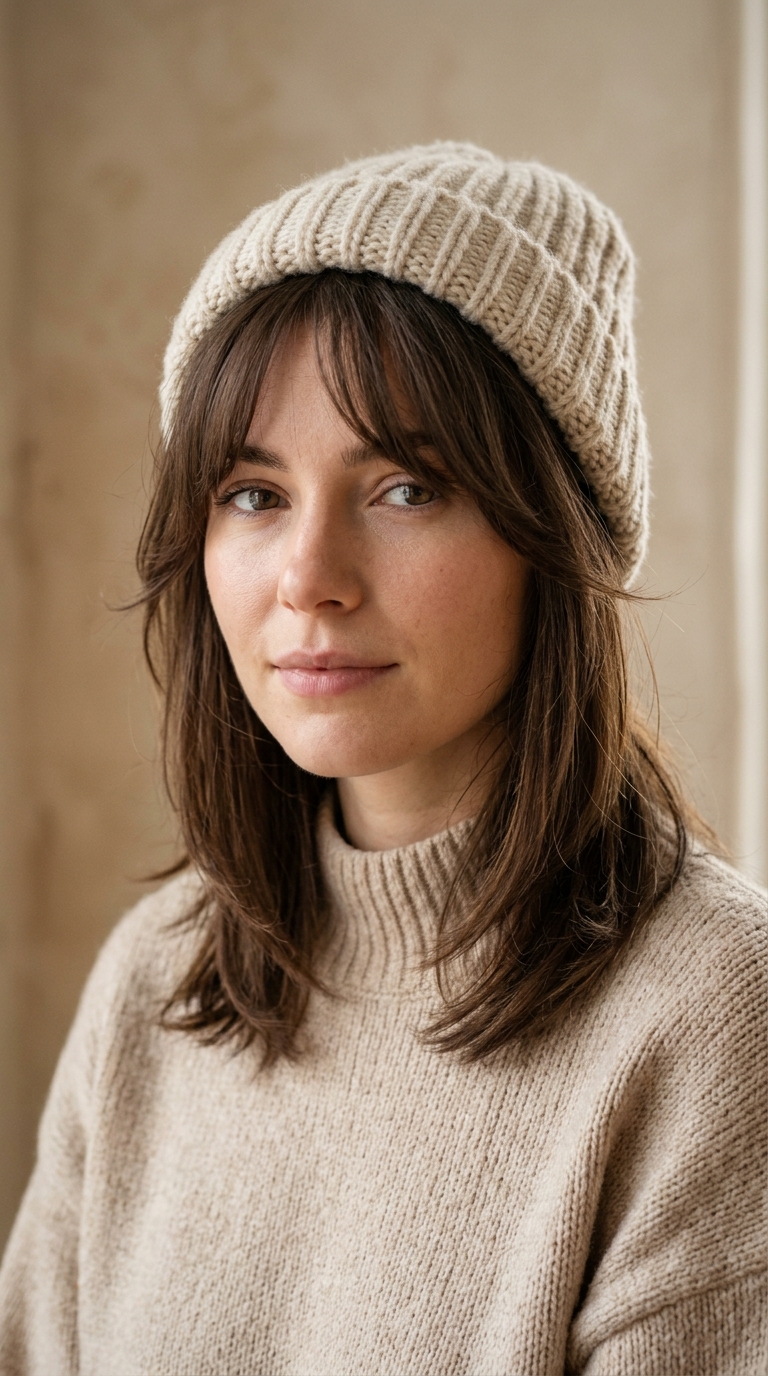
Curtain bangs part in the middle and sweep out to each side, so they open up the face instead of sitting like a wall.
That matters in winter. When a hat or earmuffs go on, you tuck the bangs behind your ears and carry on. Longer, wispy ones also grow out gently, so there is no awkward stage by February.
Fine hair does best with a lighter, shorter curtain.
Dry the bangs first, while the rest of your hair is still damp, using a round brush.
Part them in the middle and sweep each side outward with your fingers.
Pull the beanie on from the back of your head and stop at the hairline, so the bangs stay out front.
5. A Textured Pixie for Five Minute Mornings
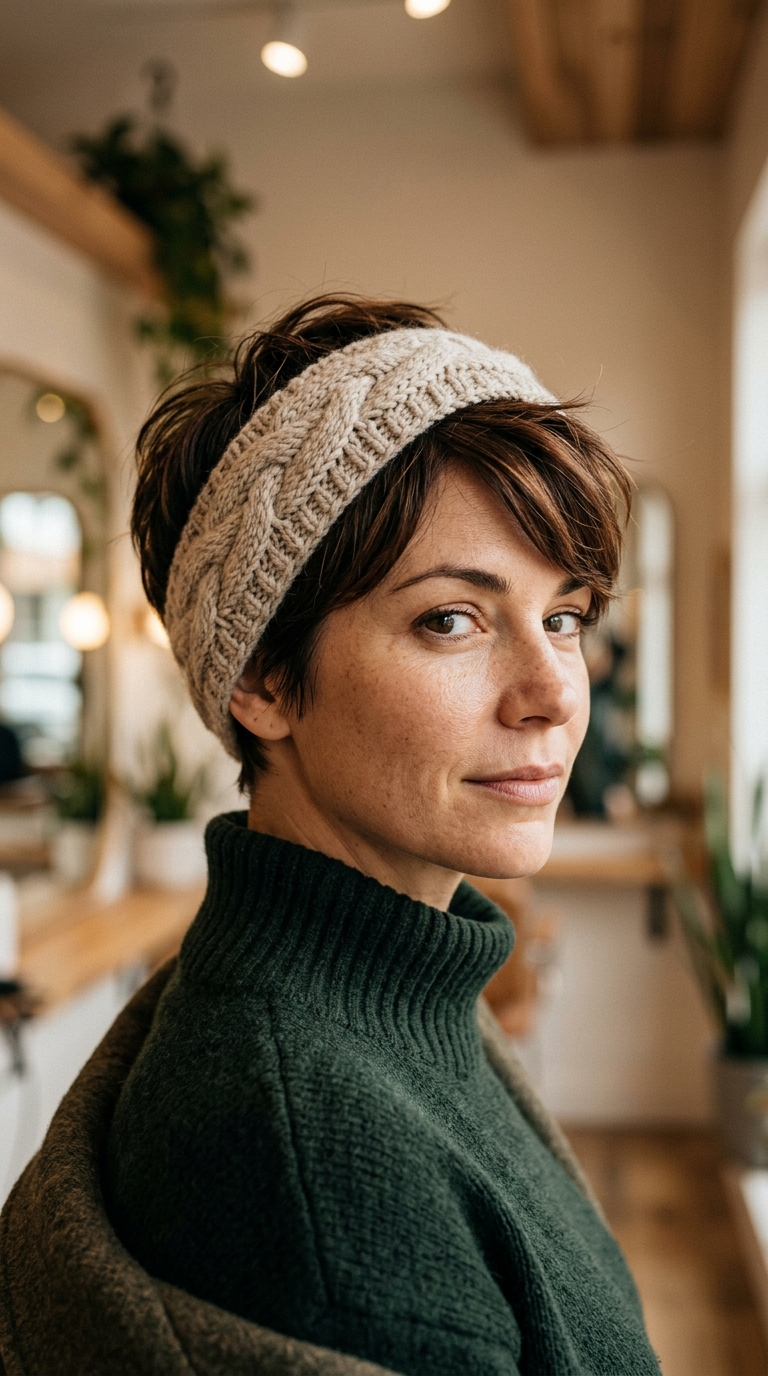
A pixie is not just a summer cut.
In winter there is nothing to catch in a scarf or coat zipper, and nothing to detangle after a windy walk. Leave the top long enough to push around with your fingers, and keep the sides and back tidy so a beanie sits flat over them.
The one trade off is cold ears, so keep a headband close.
Quick Comparison Table: Styles 1 to 5
| Idea | Best Hair Type | Effort | Vibe |
|---|---|---|---|
| 1) Angled Lob | Straight to wavy | Low | 🧣 Scarf friendly |
| 2) Long Layers | Medium to thick | Medium | 🧢 Hat friendly |
| 3) Shaggy Bob | Thick, wavy | Low | 🌿 Relaxed |
| 4) Curtain Bangs | Fine to medium | Medium | ✨ Soft |
| 5) Textured Pixie | Fine to medium | Medium | 🔥 Bold |
6. A Blunt Jaw Length Bob for Fine, Static Prone Hair
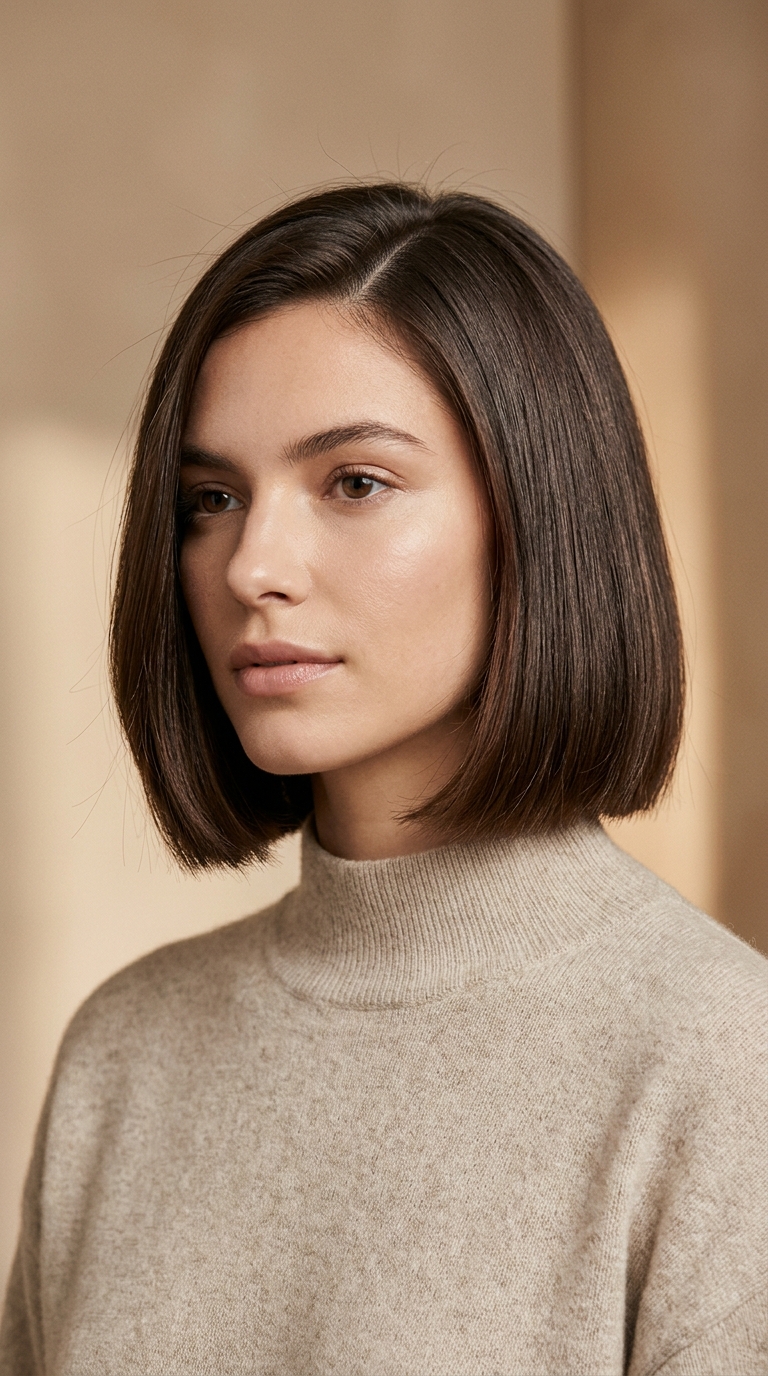
Layers can make fine hair look thinner, and a blunt edge does the opposite.
A one length cut at the jaw packs all the hair into a solid line, so it looks fuller from the first day. It also gives static fewer loose ends to grab onto. Ask the stylist to go easy on thinning shears, since those are what make fine hair look wispy.
At home, a drop of lightweight oil on the ends keeps the line clean.
What to ask for
7. A Shaped Curly Cut That Holds Its Moisture

Curls shrink and dry out faster in cold air, so shape matters more than length.
Book a stylist who cuts curls dry, or one curl at a time, so they can see where each spiral falls. A rounded shape with longer layers on top keeps the curls bouncy and stops the dreaded triangle from forming.
Chin to shoulder length is the sweet spot. It stays off the coat collar and still has enough weight to hold the curl pattern.
Get the cut done on dry or styled curls.
Keep the length at chin or shoulder.
Razor thinning that roughs up the curl.
Brushing dry curls into a puff.
8. A Bixie Cut for Growing Out a Pixie

Growing out a pixie takes patience, unless you cut it into a bixie.
A bixie sits between a bob and a pixie. It has short, tapered layers around the nape and a longer fringe that can sweep across the forehead. You get the easy shape of a short cut with enough length to tuck behind an ear under a hat.
It also hides the awkward in between weeks, which is why many stylists suggest it.
⚠️ Watch Out
The short back and sides lose their shape quickly. Book a tidy up every few weeks, or the cut turns shaggy at the neck right when your scarf is rubbing there.
9. A Dusting Trim for Long, Straight Hair
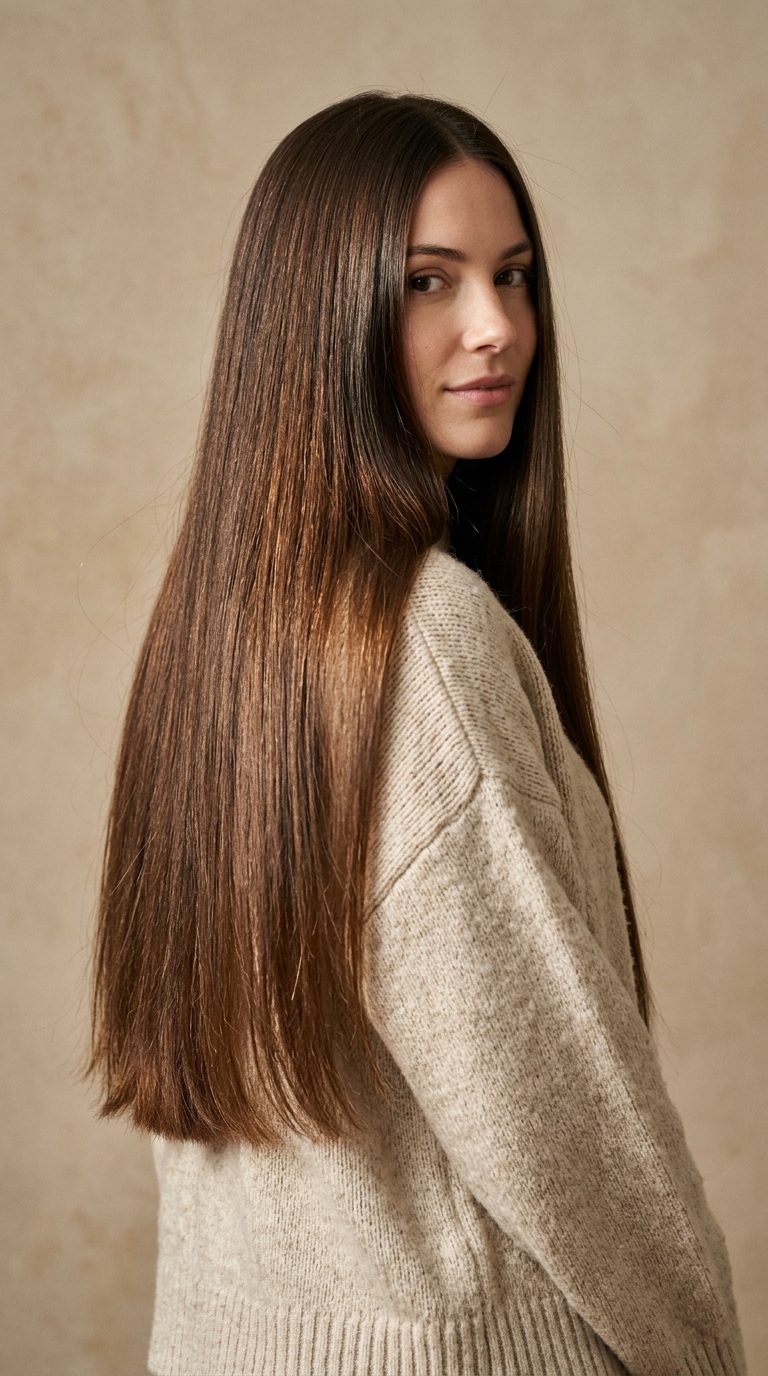
Cutting off inches is not the only fix for dry winter ends.
Dusting means trimming only the very ends, just the frayed bits, so your length stays almost the same. Hold a few strands up to the light. If the ends look split or see through, they are ready.
Frayed ends snag on wool and rub into static, so a tiny trim does more than you would expect.
Keep your length and lose only the damaged ends. A light trim often beats a big chop.
10. A Mid Length Cut Built to Air Dry

Leaving the house with damp hair is miserable in winter, and daily heat styling dries it out even more.
Ask for a mid length cut with soft, even layers, so your natural bend or wave shows up without help. The shape does the work while you do something else.
Here is the routine that keeps it frizz free:
Squeeze out water with a microfiber towel or an old cotton t-shirt.
Work a leave in cream through damp hair from mid length to ends.
Scrunch once or twice, then leave it alone until it is dry. Touching it breaks up the waves.
Quick Comparison Table: Styles 6 to 10
| Idea | Best Hair Type | Effort | Vibe |
|---|---|---|---|
| 6) Blunt Jaw Bob | Fine, straight | Low | 💎 Sleek |
| 7) Shaped Curly Cut | Curly, coily | Medium | 🌀 Bouncy |
| 8) Bixie | Fine to medium | Medium | ✨ Playful |
| 9) Dusting Trim | Long, straight | Low | 🌙 Quiet |
| 10) Air Dry Mid Length | Wavy, slight bend | Low | 🍃 Easy |
Short Q&A
Which cut works best for fine hair in winter?
A blunt jaw length bob or a bixie. Both keep the ends dense, so the hair looks fuller under a hat.
Will a short cut leave me colder?
Your neck and ears are more exposed, so a scarf and headband matter more. Many women find the trade off worth it, since short hair never gets trapped in a coat.
How often should I trim for winter?
Longer cuts do well with a trim every couple of months. Pixies and bixies hold their shape best with a tidy up every few weeks.
Can I ask for these cuts with curly hair?
Yes, but tell the stylist your curl type up front. The shaped curly cut, the shaggy bob, and the air dry mid length all suit curls well when cut dry.
Conclusion
A good winter cut does half the styling for you. It sits under the scarf, bounces back after the beanie, and dries without a fight, which is what makes winter haircuts for women worth planning before the cold really sets in.
Pick the idea that matches your hair type and your morning routine, then bring this list to your stylist so you can point to exactly what you mean. Small details like the length at the collarbone or a lighter touch with thinning shears are what make the difference.
Save this list for your next salon visit, and keep it handy when you start thinking about a fresh start for winter.