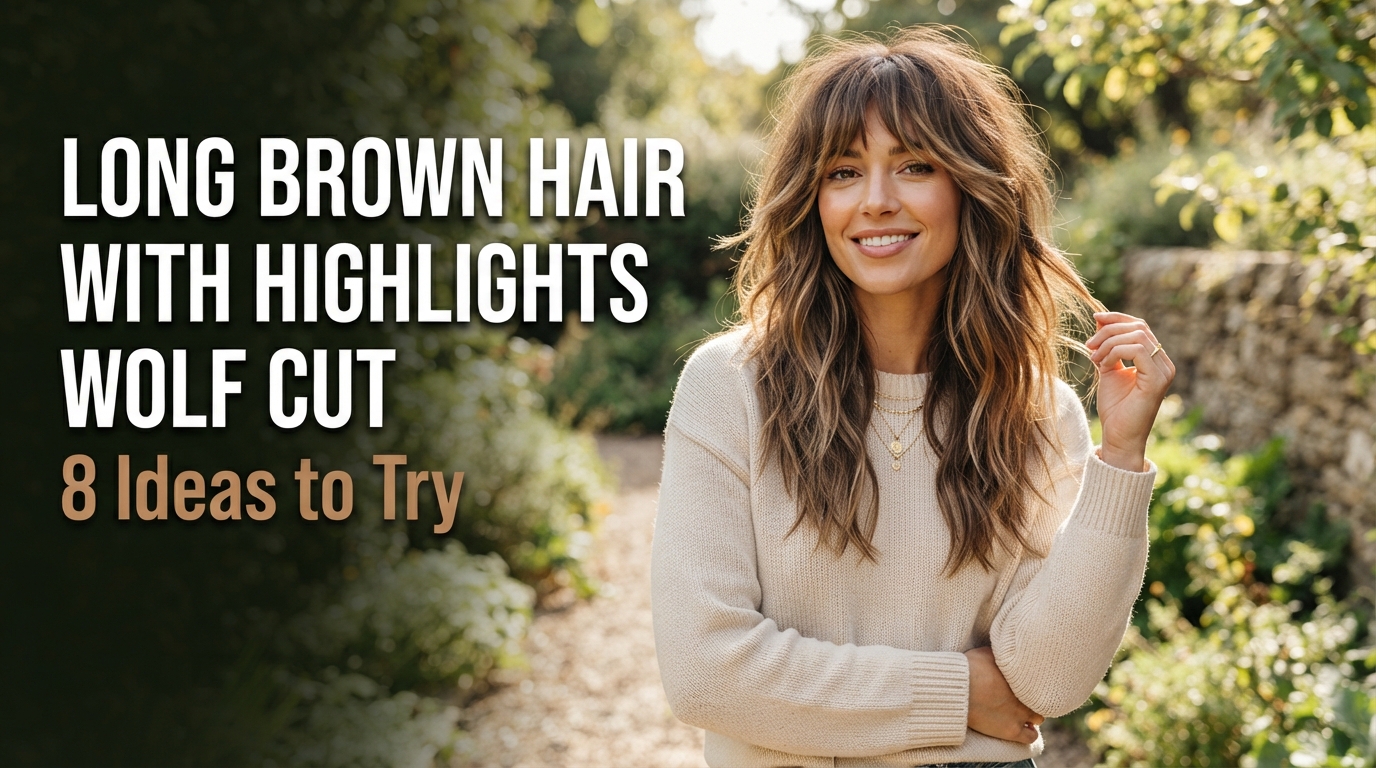
Long Brown Hair With Highlights Wolf Cut: 8 Ideas That Work
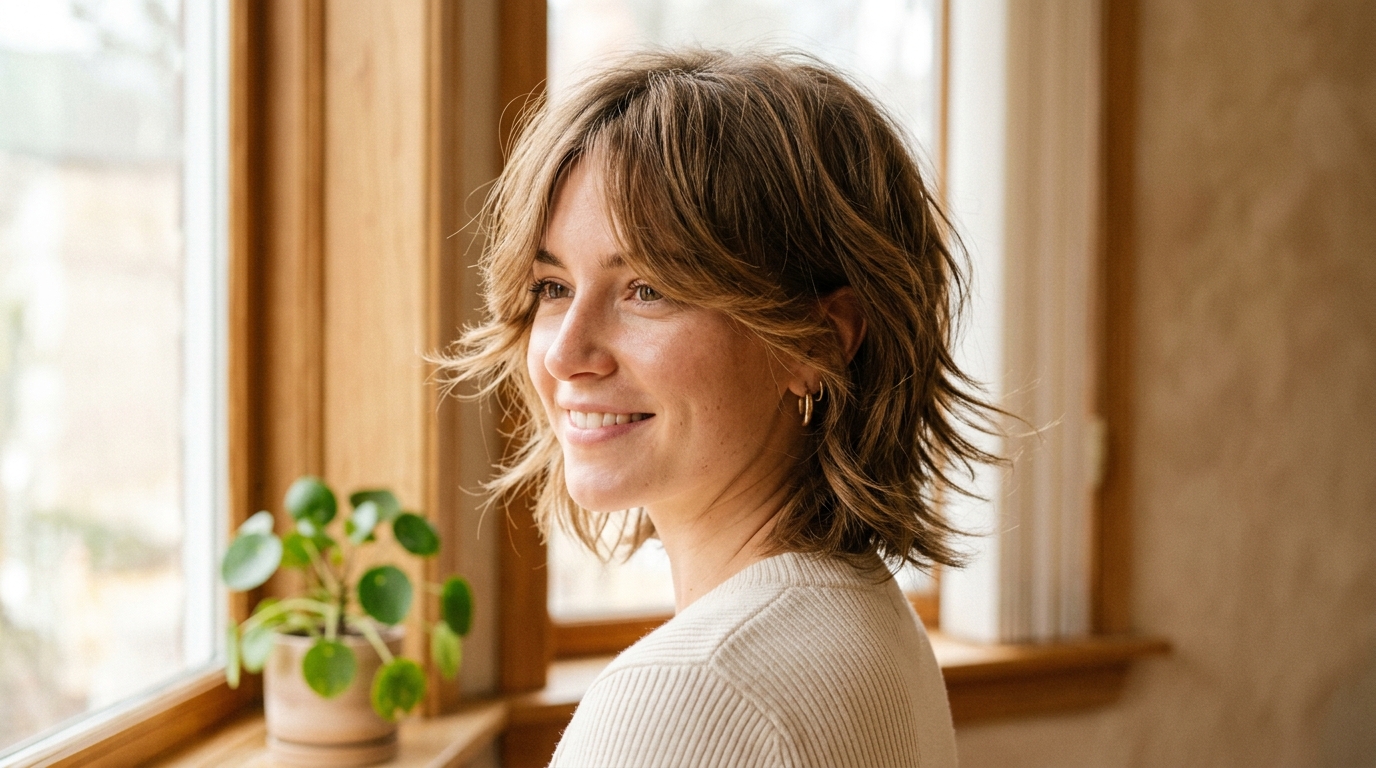
A wolf cut already does half the work for you, since the shaggy layers and face-framing pieces give texture without much effort. But plain brown on a wolf cut can look a little flat, especially once the layers grow out and lose some of their shape.
That is where long brown hair with highlights wolf cut styling comes in. The right placement of color brings the layers back to life, catches light in a way plain brown cannot, and makes the cut look intentional even on a lazy hair day.
Some of these ideas are barely-there, meant to look like your hair just naturally lightened over summer. Others are bold enough to be the whole point of the haircut. Both directions work well with the wolf cut’s built-in texture.
Below are eight ways to add highlights to a long brown wolf cut, from subtle to statement-making.
1. Face-Framing Balayage on a Long Shaggy Wolf Cut
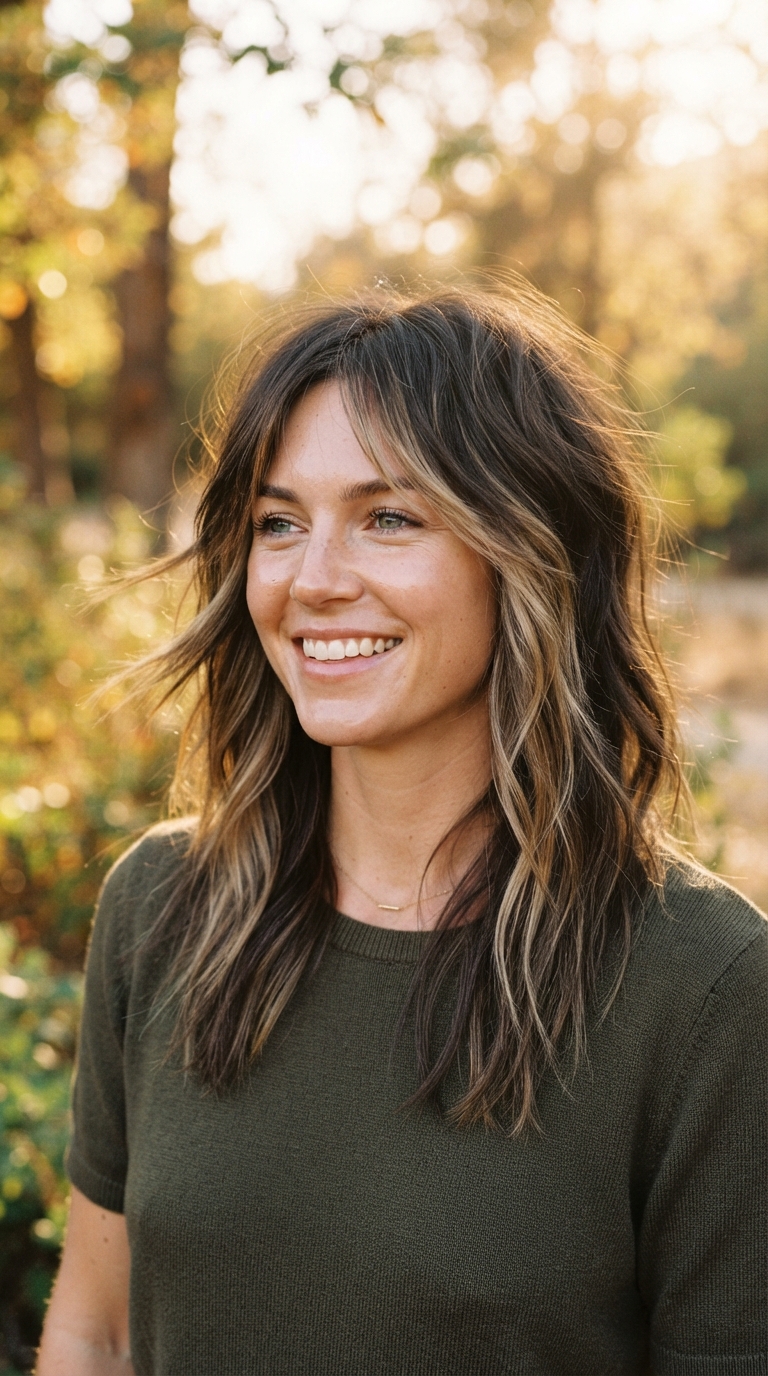
The wolf cut already puts a lot of movement around the face, thanks to the shorter, choppier layers up top. Balayage placed specifically along those pieces takes advantage of that structure, since the color falls right where the layers already draw the eye.
Unlike foil highlights, balayage is hand-painted, so the color looks soft and gradual rather than striped. That softness matters a lot on a wolf cut, where the layers are already doing plenty of visual work on their own.
A few things make this version work well:
- Ask for balayage concentrated on the top layers and face-framing pieces, not scattered evenly through the whole head.
- Request a shade two to three tones lighter than your base, not a drastic jump.
- Have your colorist check the placement while your hair is dry, since wet hair hides where the layers actually fall.
This is one of the lowest-maintenance highlight options on this list. Because balayage grows out softly, most people stretch four months or longer between appointments.
2. Soft Money Piece Highlights for an Easy Wolf Cut
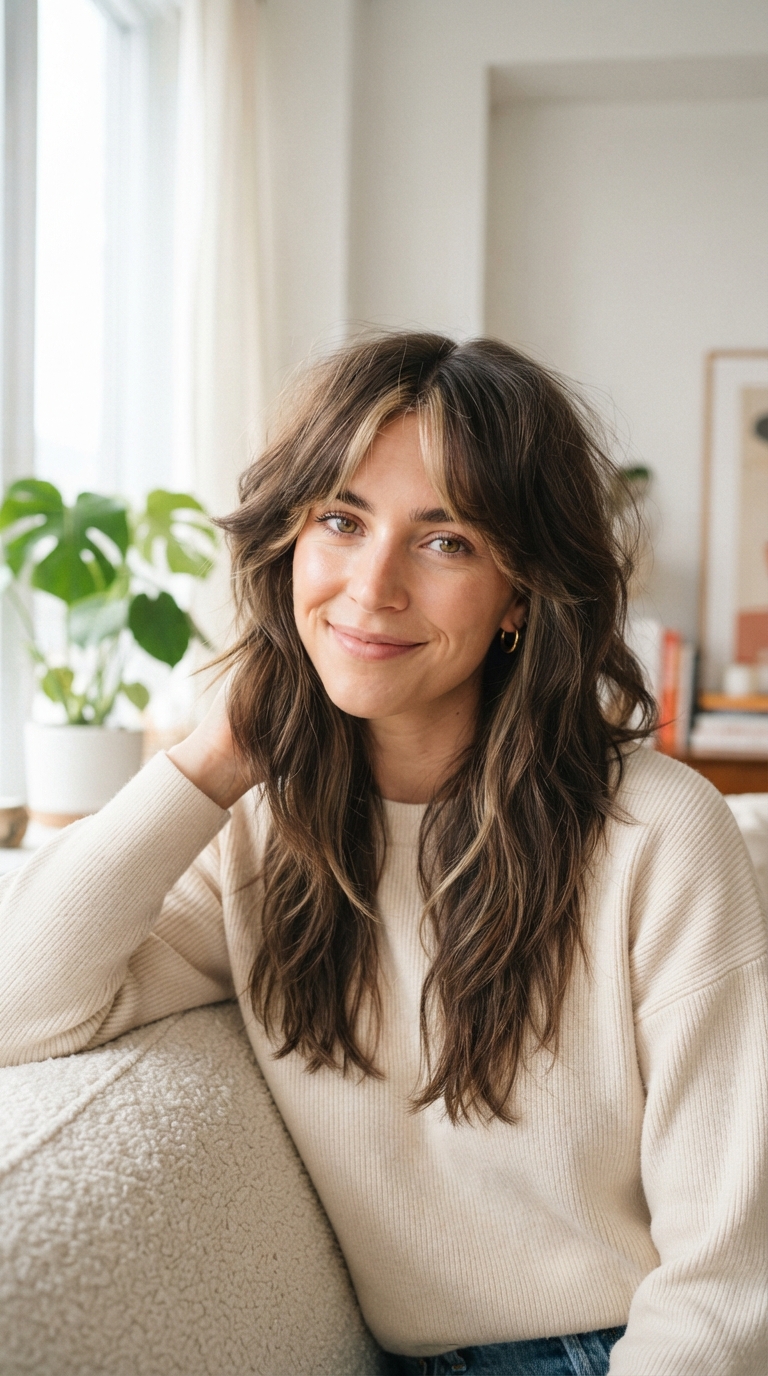
A money piece keeps the color commitment small. Two face-framing pieces near the part pick up light, while the rest of the hair stays your natural brown. On a wolf cut, this pairs especially well with the shorter face pieces the cut already has built in.
The appeal here is simple. It takes far less time in the chair than full highlights, costs less, and still gives noticeable brightness right where people look first, which is your face.
What to expect from this option:
Time in the chair: usually under an hour for placement alone. Maintenance: low, since only two small sections need touch-ups. Best paired with: curtain bangs or face-framing layers, both common on a wolf cut. Risk: minimal, since a small mistake here is easy to blend out or fix.
Keep the two pieces close to your part rather than starting them too far back, or the effect gets lost once your hair moves.
3. Chunky Highlights for an Edgier Wolf Cut
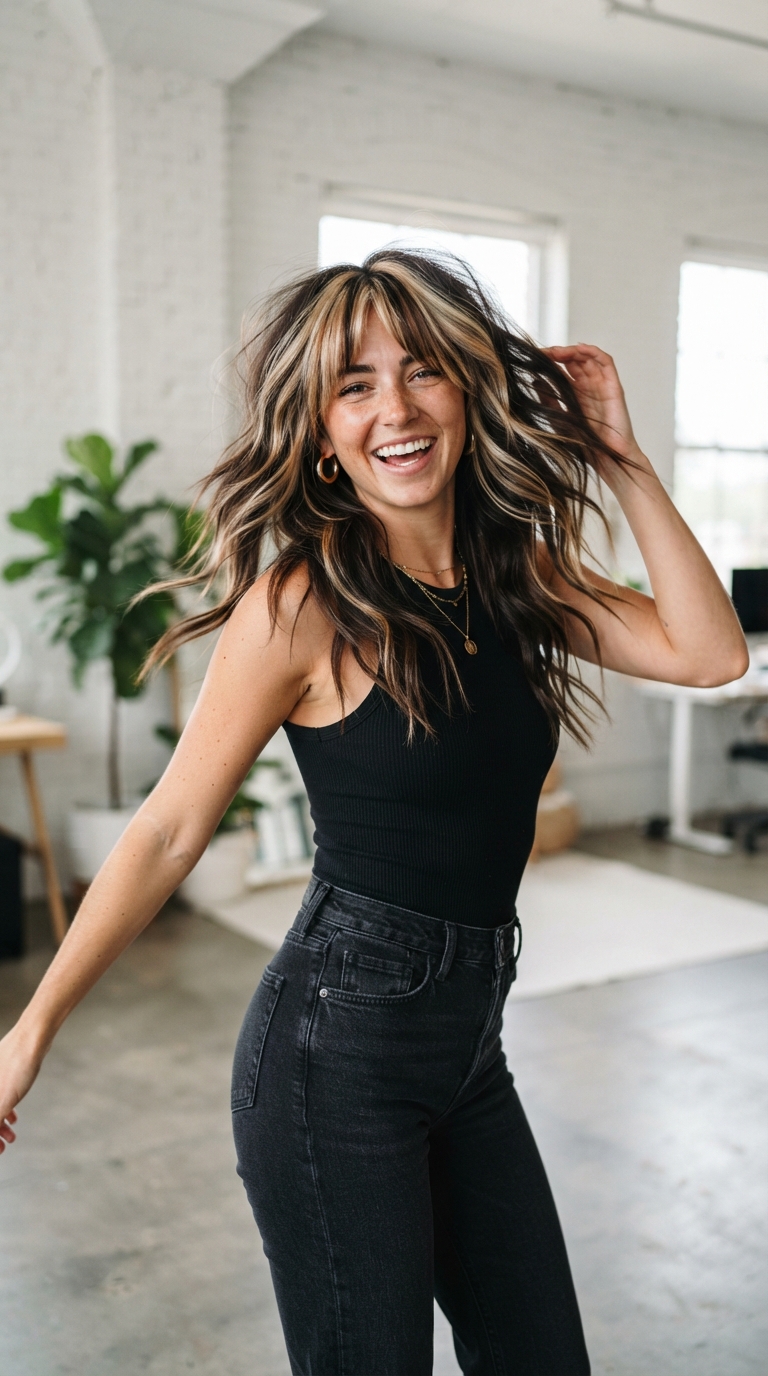
Not every wolf cut needs to look soft and effortless. Chunky highlights take the opposite approach, using wider sections of color placed deliberately through the choppy top layers instead of thin, blended pieces.
The wolf cut’s messier layers actually make chunky highlights easier to pull off than they would be on a sleek, one-length cut, since the layers already break up the hair in a similar bold way.
Here is how to approach getting this look done:
- Bring reference photos showing wide, visible highlight sections, not fine balayage, so your colorist understands the scale you want.
- Ask for placement concentrated on the crown and face-framing layers, where the wolf cut already has the most movement.
- Request a toner appointment about a month in, since chunky highlights show brassiness more obviously than fine ones.
This is a higher-commitment option. Regrowth shows faster with wider sections, so plan on touch-ups every two to three months if you want it looking crisp.
4. Babylights Woven Through Brown Wolf Cut Layers
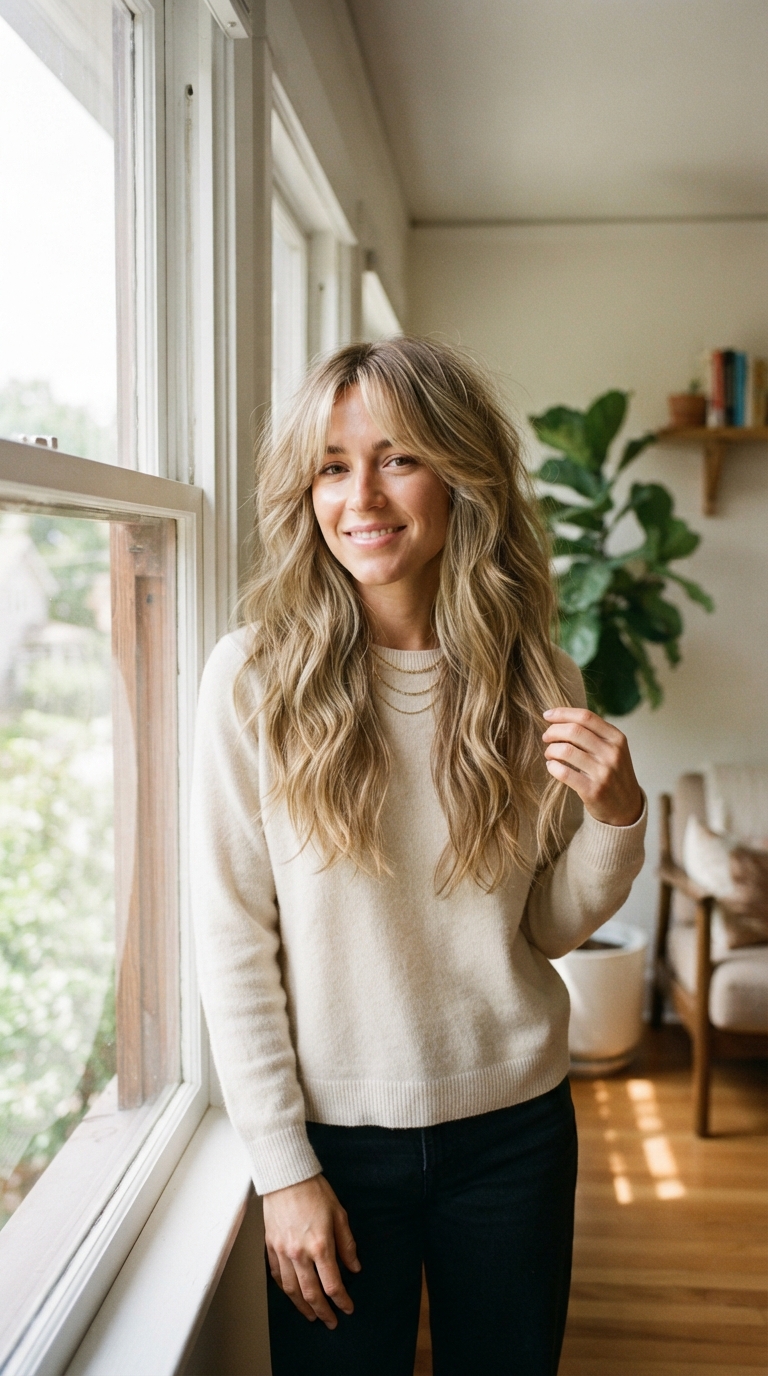
Babylights are the finest, most delicate highlight technique available, using thin, closely spaced foils that mimic how a child’s hair naturally lightens in the sun. On a wolf cut, they add dimension through every layer without changing the overall brown base much at all.
This technique takes longer in the salon than balayage or a money piece, since so many thin foils are involved, but the result blends so seamlessly that regrowth is barely noticeable for a long stretch afterward.
A few reasons this option works so well on a wolf cut specifically:
- The layers catch light from multiple angles, and babylights show up in each one instead of just at the surface.
- The subtlety means the cut’s texture stays the main focus, with color acting as a support rather than a statement.
- It ages well, since there is no harsh line to grow out awkwardly.
Expect a longer appointment than other options here, often three hours or more depending on hair length and thickness.
| Idea | Best For | Effort | Vibe |
|---|---|---|---|
| 1) Face-Framing Balayage | low upkeep, soft brightness | Low | ☀️ sun-kissed |
| 2) Money Piece | quick, low-cost brightness | Low | 💫 subtle accent |
| 3) Chunky Highlights | bold, editorial looks | High | ⚡ bold |
| 4) Babylights | seamless, long-lasting blend | Medium | ✨ delicate dimension |
5. Dark Roots Fading Into Caramel Ends (Wolf Cut Ombre)
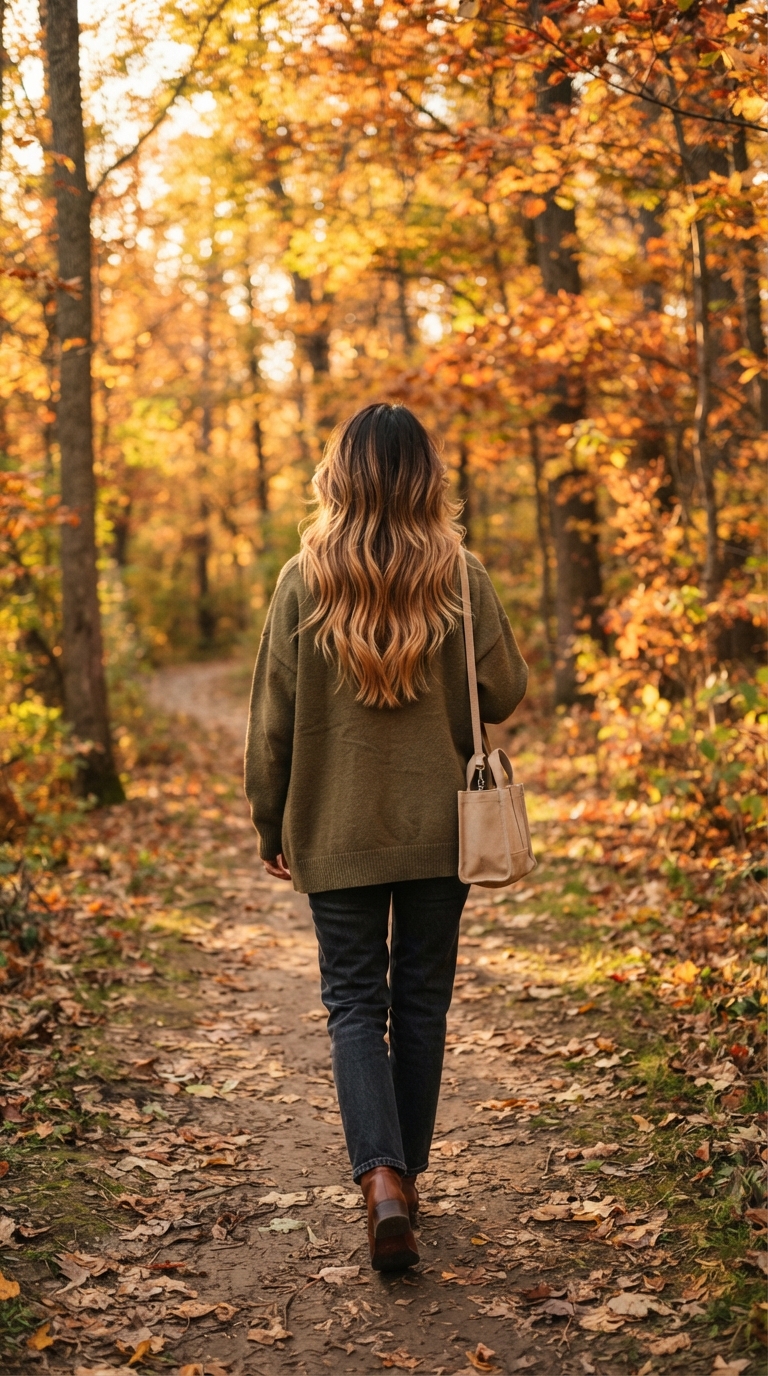
Ombre works differently on a wolf cut than it does on a blunt, one-length style. Because the wolf cut already has heavy layering, the gradient from dark roots to caramel ends shows up at multiple points throughout the hair instead of just at the very bottom.
This is one of the most forgiving highlight styles for growing out, since the whole idea is a gradual transition rather than a hard line. Some people go three to four months without a touch-up and barely notice regrowth, because dark roots blending into a darker natural color just looks like part of the design.
A quick note before booking: ask your colorist to keep the transition point higher up if you have thinner hair, since a gradient that starts too low can make ends look sparse.
The caramel tone also tends to suit medium to deep brown bases better than very light brown, since the contrast reads richer rather than washed out.
6. Peekaboo Highlights Hidden Underneath a Long Wolf Cut
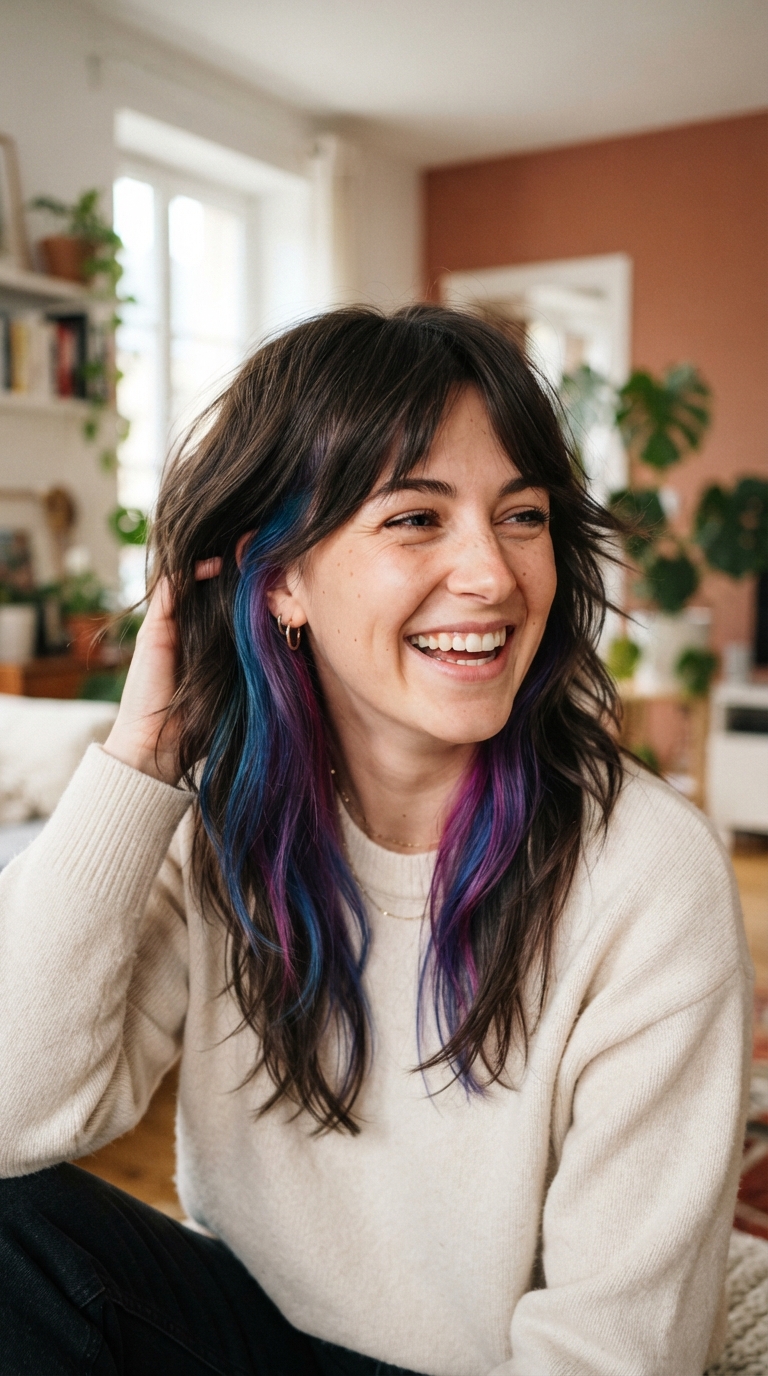
Peekaboo highlights sit underneath the top layer of hair, invisible when your hair falls naturally but visible the moment you tuck it behind your ear, tie it up, or let the wind move it. On a wolf cut, the layered top does a good job of hiding them until you want them seen.
This is the option to pick if your workplace or daily life does not leave much room for visible hair color, but you still want something for yourself. It is a private kind of dramatic.
What makes this technique work well:
- Placement stays underneath the crown, so nothing shows from a front-facing angle.
- You control when it is visible, simply by how you style your hair that day.
- It is a lower-cost highlight service than full balayage, since less hair needs coloring overall.
The one thing to watch is regrowth near the part, since even hidden highlights can peek out if the roots grow in noticeably lighter or darker than expected.
7. Curtain Bangs With Subtle Highlights on a Wolf Cut
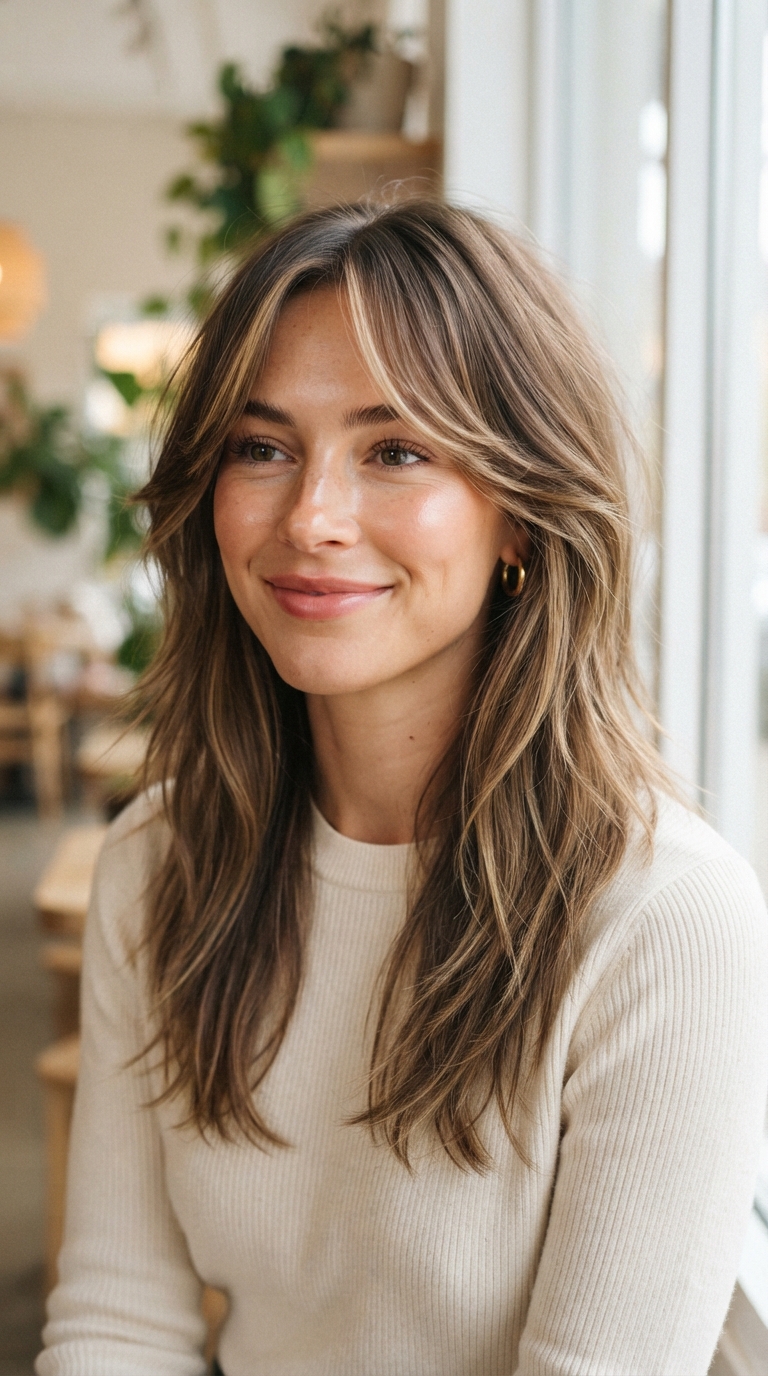
Curtain bangs have become a near-permanent pairing with the wolf cut, since both styles share the same soft, face-framing philosophy. Adding subtle highlights just to the bang pieces brightens the face without touching the rest of the cut.
This is a smaller, faster service than most other options on this list, since only the front section needs attention. It works especially well for anyone who already has curtain bangs and wants to refresh them without a full color appointment.
Here is the simplest way to approach it:
- Ask for highlights placed only on the bang pieces that fall along your cheekbones.
- Request a shade close to your natural color, just two shades lighter, so it reads as sunlight rather than an obvious dye job.
- Book a gloss touch-up every couple of months to keep the color from turning brassy near your face, which shows more than anywhere else.
Because so little hair is involved, this tends to be one of the more affordable highlight services on the list.
8. Reverse Balayage: Dark Lowlights Over Natural Highlights

If your hair has already lightened naturally from sun exposure, reverse balayage works with that instead of adding more brightness. Darker lowlights get painted in strategically, deepening certain sections while letting your natural highlights stay visible in between.
On a wolf cut, this creates real depth through the layers rather than an all-over flat color. It tends to suit people whose hair has gotten a bit too light or brassy over time and want to bring some richness back without going fully dark again.
A few practical notes on this option:
Cost tends to run similar to standard balayage, since it is the same hand-painting technique in reverse. Time in the chair usually runs one and a half to two hours. Upkeep sits in the medium range, since the natural highlights underneath will keep lightening on their own between visits. Best suited for hair that already has some natural lift from sun or previous color.
| Idea | Best For | Effort | Vibe |
|---|---|---|---|
| 5) Dark Roots to Caramel Ends | forgiving regrowth, longer stretches | Low | 🍁 warm gradient |
| 6) Peekaboo Highlights | strict workplaces, private color | Low | 🙈 hidden detail |
| 7) Curtain Bang Highlights | quick refresh, face brightening | Low | 🌤️ soft glow |
| 8) Reverse Balayage | sun-lightened or brassy hair | Medium | 🌰 rich depth |
Short Q&A
Does a wolf cut make highlights harder to maintain?
Not really. If anything, the layers help hide regrowth better than a blunt cut would, since the shorter top pieces already break up the hair’s uniformity.
Which highlight style grows out the most gracefully?
Balayage and the dark-roots-to-caramel-ends option both grow out gradually with no hard line, making them the easiest to stretch between appointments.
Can I combine two of these ideas, like a money piece with peekaboo highlights?
Yes, and it is a common request. Just mention both to your colorist upfront so they can plan the sections together instead of layering two separate services awkwardly.
How often should I get a gloss or toner between full color appointments?
Every four to six weeks for most highlight styles, especially anything with copper or caramel tones, which shift toward brass faster than ash or cool-toned shades.
Bringing It All Together
Long brown hair with highlights wolf cut styling gives you a lot of room to work with, since the cut’s built-in layers can carry anything from a barely-there money piece to bold chunky sections. The right choice really comes down to how much upkeep you want and how bold you are feeling.
If low maintenance matters most, balayage or the caramel ombre transition will serve you longest between salon visits. If you want brightness without full commitment, a money piece or curtain bang highlight gets you there fast. And if you are ready to make color part of the whole look, chunky highlights or reverse balayage bring real depth to every layer of the cut.
Save this list before your next appointment, so you walk in with a clear idea instead of leaving it up to chance.
A wolf cut’s layers make almost any highlight technique easier to maintain, so pick based on how bold you want to look, not on upkeep worries.