Butterfly Cut vs Wolf Cut: 8 Ways to Tell Which One Is Actually Yours
You saved ten different butterfly cut and wolf cut photos on Pinterest, and now you have zero idea which one your stylist should actually cut into your hair.
That confusion makes sense. Both cuts use heavy layers. Both promise movement and volume. And most tutorials just show finished results without explaining what separates butterfly cut vs wolf cut in the first place, so you walk into the salon repeating a trend name without knowing if it fits your face, your length, or your hair type.
Here is the honest part. These two cuts solve different problems. One is built around soft, blended layers that frame your face. The other is choppier, shorter on top, and closer to a shag with attitude. Picking the wrong one means sitting through months of awkward growth or a cut that fights your natural texture every morning.
This list breaks down the real differences, section by section, so you can walk into your next appointment and ask for exactly what will work on you, not just what looked good on someone else’s hair.
1. Face Shape Match: Which Cut Actually Flatters You

Round faces and square faces respond differently to each cut, and that is where most of the confusion starts.
The butterfly cut layers the top shorter and blends outward, which pulls attention up and elongates a rounder face. The wolf cut sits choppier through the crown and can add width right where a round or heart shaped face already has fullness. If your face is longer or oval, both cuts work, but the wolf cut adds more texture near the jaw, which can shorten the appearance of the face slightly.
Bring a photo of your actual face shape to your appointment, not just the finished style you like.
| Butterfly Cut | Wolf Cut |
|---|---|
| Round face: elongates, pulls focus up | Round face: can widen the crown area |
| Square face: softens strong jawline | Square face: matches the angles well |
| Oval or long face: works with most lengths | Oval or long face: shortens with jaw texture |
| Heart face: balances a narrow chin | Heart face: can add unwanted width up top |
2. The Layering Difference That Changes Everything
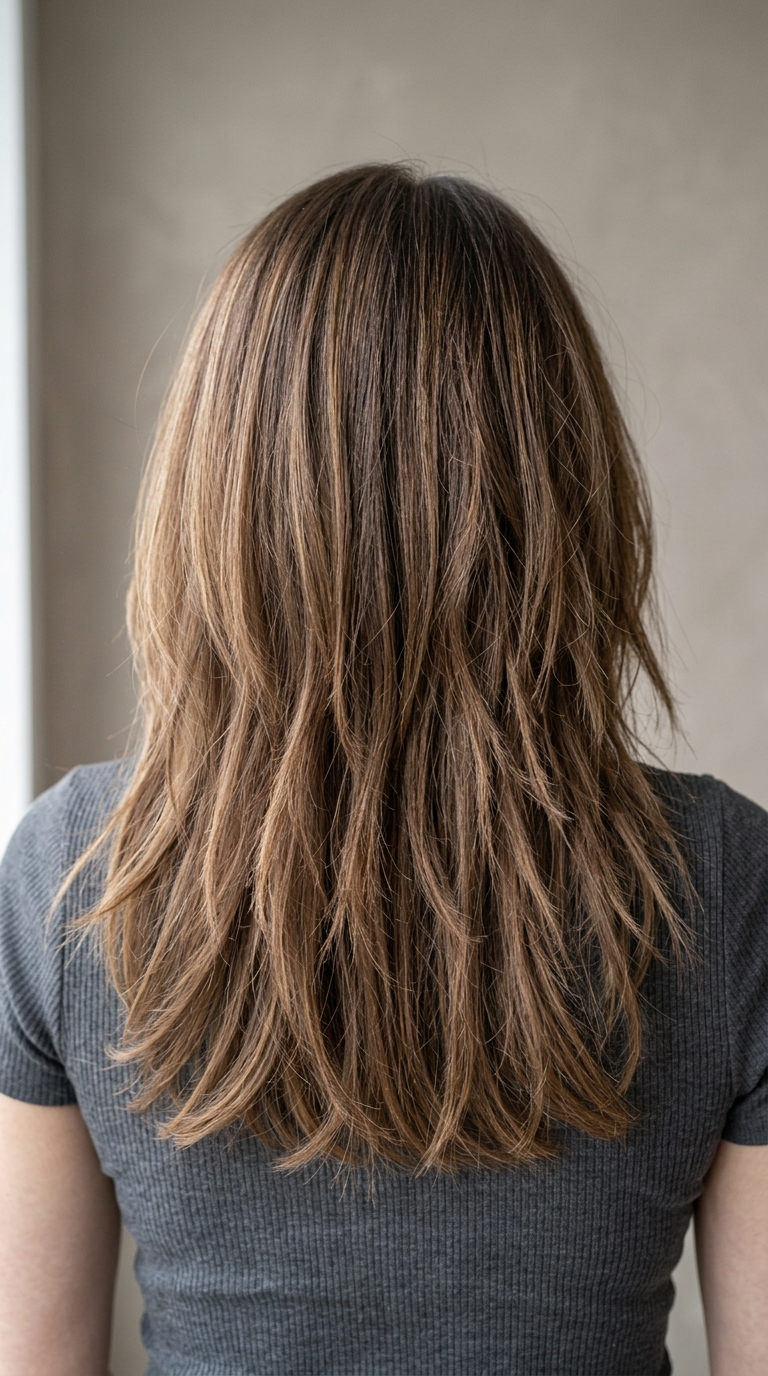
Layers are the real difference, not the name.
Butterfly cut layers are cut short at the crown and blended down in soft, connected pieces, so the transition barely shows. Wolf cut layers are choppier, more disconnected, and often point cut for texture, which is why it looks rougher and more separated on purpose.
That structural gap is why one styles smooth and the other styles messy by design.
3. Length Check Before You Commit To Either Cut

Length matters more than most people admit before booking either cut.
Butterfly cut works best starting at collarbone length or longer, since the shorter top layers need length underneath to blend into. Wolf cut can work shorter, even at chin to shoulder length, because it leans into choppy separation instead of smooth blending.
Check these before your appointment:
Before you book, check
4. Face-Framing Pieces: Soft Curtain vs Choppy Shag

The face-framing pieces are what people usually screenshot and forget to ask about specifically.
Butterfly cut framing curves in soft, rounded pieces along the cheeks, cut long enough to tuck behind an ear on a bad hair day. Wolf cut framing is choppier and shorter, often landing at the jaw or above, with blunt or textured ends instead of a soft curve.
Ask your stylist to show you both versions on hair your length, since framing looks different than it does on a mannequin head.
No framing pieces, hair falls flat against the cheeks with no movement near the face.
Soft curtain pieces or choppy jaw length layers pull attention to the cheekbones instantly.
5. Your Morning Styling Routine With Each Cut

Morning styling time is where the two cuts really split. Butterfly cut needs more blow dry and round brush work to keep the blended layers smooth, usually 10 to 15 minutes with heat. Wolf cut leans into texture, so a quick scrunch with a texturizing spray looks intentional instead of undone. Neither cut is low maintenance, but they ask for time in different ways.
Here’s the fast wolf cut routine on busy mornings:
Rough dry hair upside down to build volume at the root.
Twist a few random pieces with a 1 inch curler, skipping the rest.
Scrunch in a texture spray and leave the ends separated, not brushed smooth.
6. How Often You’ll Be Back In The Chair
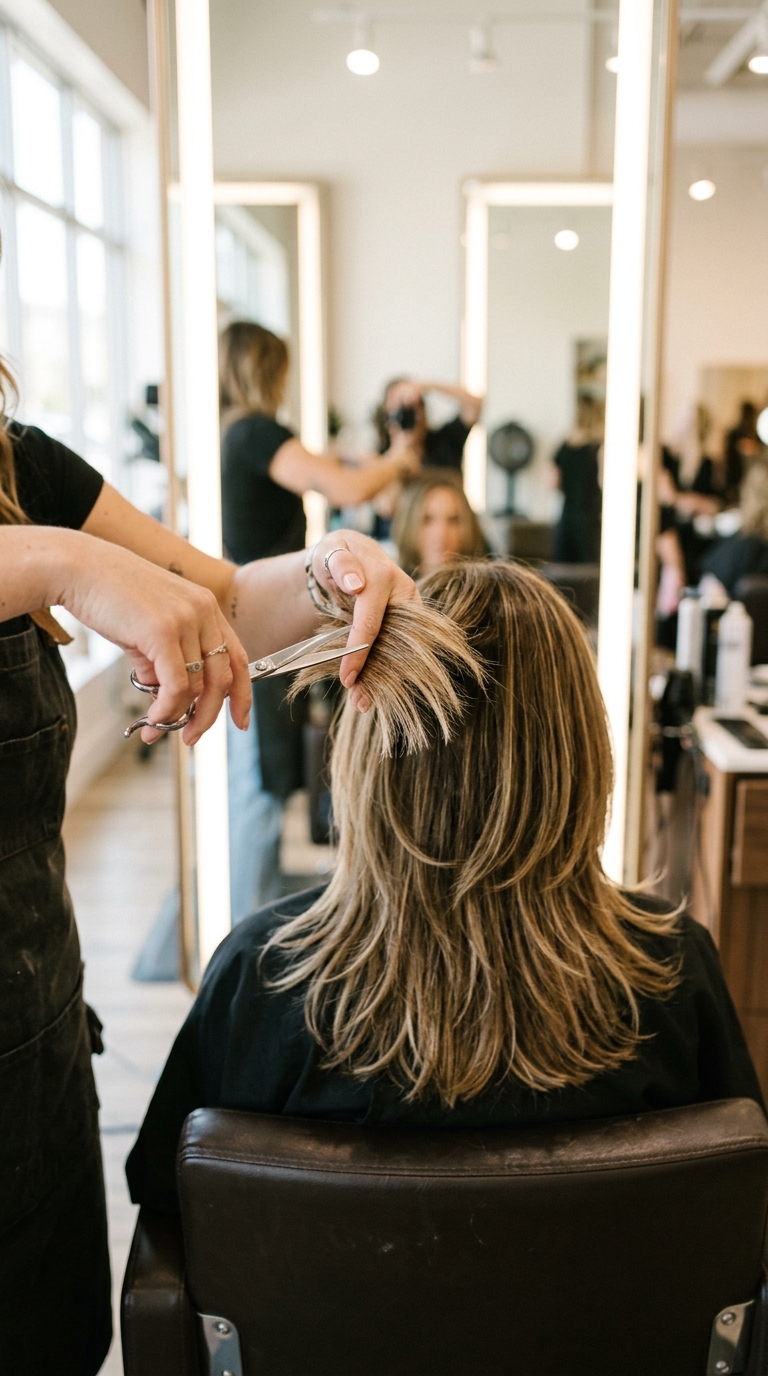
Upkeep is the part nobody mentions until you’re already sitting in the chair a month later.
Butterfly cut needs trims every 8 to 10 weeks to keep the blend from growing out unevenly, since the shorter crown layers grow at a different rate than the length underneath. Wolf cut stretches longer between visits, closer to 10 to 12 weeks, because a little grown out texture just reads as more shag.
If you travel often or skip appointments easily, that gap matters.
7. Best Hair Texture For Each Cut To Really Pop
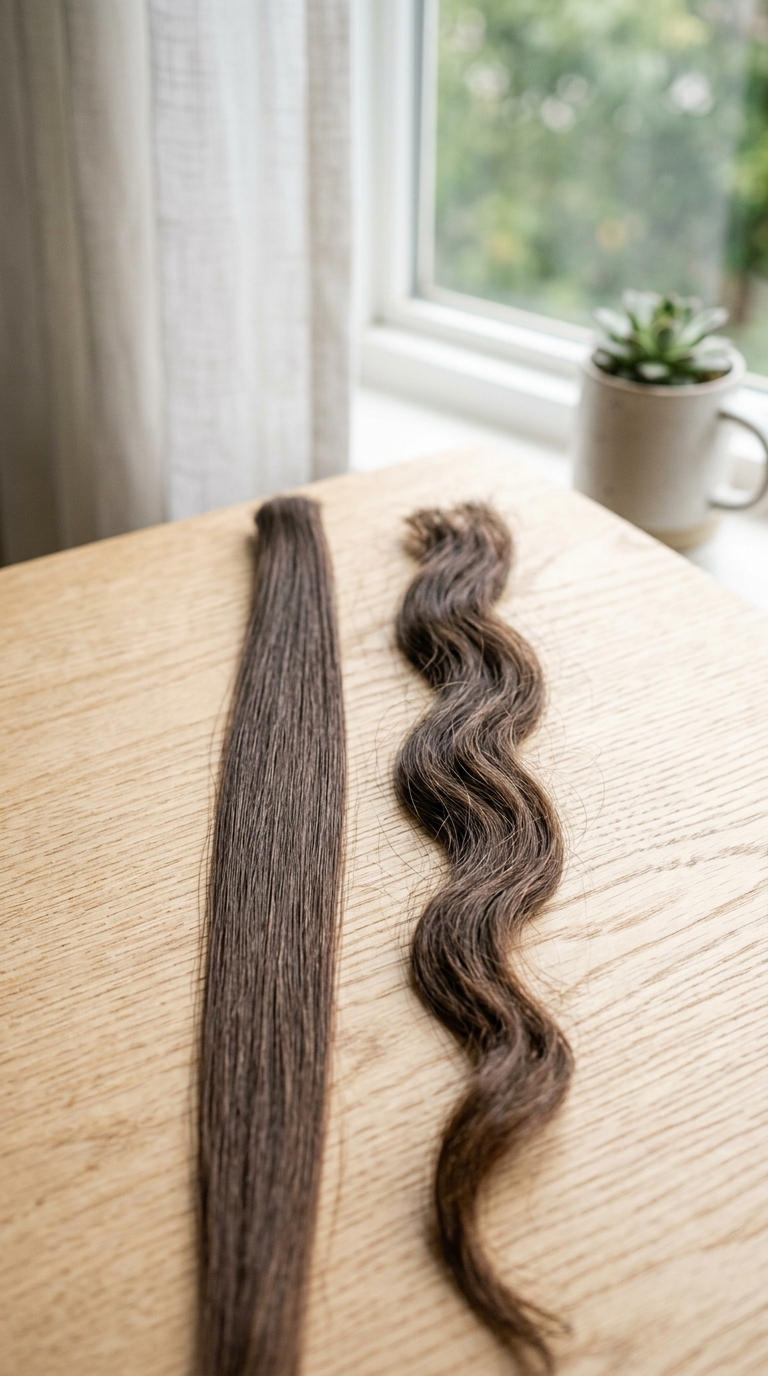
Texture decides which cut looks intentional and which looks unfinished.
Straight hair needs more product and heat to fake the piecey texture a wolf cut wants, so it can look flat without effort. Wavy and curly hair naturally supports wolf cut texture with barely any styling. Butterfly cut works well on straight and wavy hair since it relies on blend, not roughness, though very curly hair can hide the face-framing shape.
💡 Quick Tip
If your hair is straight and fine, ask your stylist about a light perm or texturizing spray alongside a wolf cut, or the choppy layers will need daily heat styling to hold shape.
8. The One Thing To Tell Your Stylist So You Don’t Walk Out With The

Wrong Cut
The wrong request at the consultation is the fastest way to end up with a cut you didn’t ask for.
Saying only “I want a wolf cut” or “give me a butterfly cut” leaves too much open to interpretation, since stylists cut these differently depending on training. Bring reference photos of your actual hair length and texture, not just the trend name, and say clearly how much length you’re willing to lose.
Bring photos of your own hair length and texture, not just the trend name.
Say exactly how much length you’re willing to lose.
Naming only the trend and expecting the stylist to guess your version of it.
Bringing a photo of hair that’s a totally different length than yours.
The real difference between butterfly cut vs wolf cut comes down to blend versus texture, not just which one is trending this week. Butterfly cut rewards patience with a round brush and works on almost any length past your collarbone. Wolf cut rewards low effort mornings and shorter hair that’s ready for some chaos.
Match the cut to your actual routine, not just the version that looked best in someone else’s after photo, and you’ll get more wear out of it before the next trim.
Save this list for the next time you’re stuck between the two at your stylist’s chair.
FAQs: Butterfly Cut vs Wolf Cut
❓ Can I get a wolf cut and grow it into a butterfly cut later?
Yes, but the layers need reshaping. Wolf cut layers are choppier and shorter, so a stylist has to blend and soften them before the butterfly shape reads correctly.
❓ Which cut is better for thin hair?
Wolf cut tends to add more visible volume on thin hair since the choppy layers create texture without needing much length removed.
❓ Do both cuts work on curly hair?
Wolf cut usually works better on curls since the texture already matches the choppy shape. Butterfly cut can lose its soft framing once curls spring up.
❓ Is one cut more damaging than the other?
Neither cut damages hair on its own. Damage comes from how often you heat style afterward, and wolf cut styling usually involves more curling or texturizing.
❓ Can I ask for a mix of both cuts?
Some stylists blend the two, using butterfly cut framing up front with wolf cut texture through the back. Bring reference photos so they know exactly what you mean.